From Legacy to Leading Edge: Real Stories of Data-Driven Transformation

Four company stories highlight the essential role of effective data management and analysis for competitive advantage.
TAKEAWAYS:
● Companies struggle with outdated legacy systems and practices; they must modernize to gain both short- and long-term advantages.
● Establishing a data-driven culture requires a delicate balance of technology, people, and processes aligned to unlock the data’s value.
● Companies need to embrace and leverage AI to maximize value from their data.
In an era where data reigns supreme, organizations are reevaluating their data strategies. The challenge lies not only in collecting vast amounts of information but also in transforming that data into actionable insights that drive meaningful change.
Many companies are overwhelmed, ensnared by legacy systems and outdated practices. Others are boldly stepping into the future, harnessing the power of analytics and artificial intelligence (AI) to redefine their operations.
The journey toward a data-driven culture requires a delicate balance of technology, people, and processes, all aligned toward a common goal: unlocking the true potential of data. As organizations embark on this path, they recognize that success depends not only on the tools they deploy but also on the foundational elements that support them.
What does it take to cultivate a thriving data ecosystem? How can companies navigate the complex terrain of data management, governance, and analytics to foster a culture of innovation? The answers lie in the diverse experiences of organizations that have ventured down this path, each facing its own unique challenges and triumphs.
Solving the Puzzle
The following client stories provide insights into the strategies employed by four different companies, each addressing unique challenges in data management and analytics. Through these narratives, we will explore how they confronted their obstacles, leveraged technology, and ultimately redefined their operational frameworks. Together, these stories not only highlight the diverse approaches to data transformation but also illustrate how each piece is essential for achieving a fully optimized system.
Breaking the Mold: Reinventing Data Management
Imagine a prominent chemicals company, rich in history and innovation, suddenly realizing that its data infrastructure is hindering its progress. With a patchwork of outdated systems and siloed information, the organization faces a daunting challenge: how to leverage data to fuel its ambitious growth strategy. It becomes clear that a comprehensive enterprise data strategy is not just a nice-to-have; it is essential for survival in a competitive market.
The work begins with a deep dive into the company’s IT setup. A thorough review reveals that the organization lacks a mature data foundation, which is vital for effective visibility and decision-making. Specifically, there are no clearly defined data products—domain-specific solutions that aggregate and present data in ways that align with strategic business needs across various functions such as procurement, supply chain, and finance.
The lack of a structured data framework prevents the current operating model from scaling to meet future demands. Leadership faces challenges due to a lack of actionable metrics and key performance indicators (KPIs) essential for informed decision-making across the value chain.
This critical moment sparks a pivotal decision: to seek external expertise to help the company develop a comprehensive data strategy. The goal is to build a robust, domain-specific data foundation that improves visibility and empowers executive leadership to make informed, data-driven decisions. By enhancing their data maturity and investing in business intelligence and reporting capabilities, the organization can transform its approach to data management and analytics.
“The chemicals company’s experience exemplifies the importance of treating data as a strategic asset.”
Business units gain the autonomy to access and analyze data independently, decreasing their reliance on IT. This newfound independence allows teams to generate insights on their own, resulting in faster decision-making and a greater sense of ownership over their data.
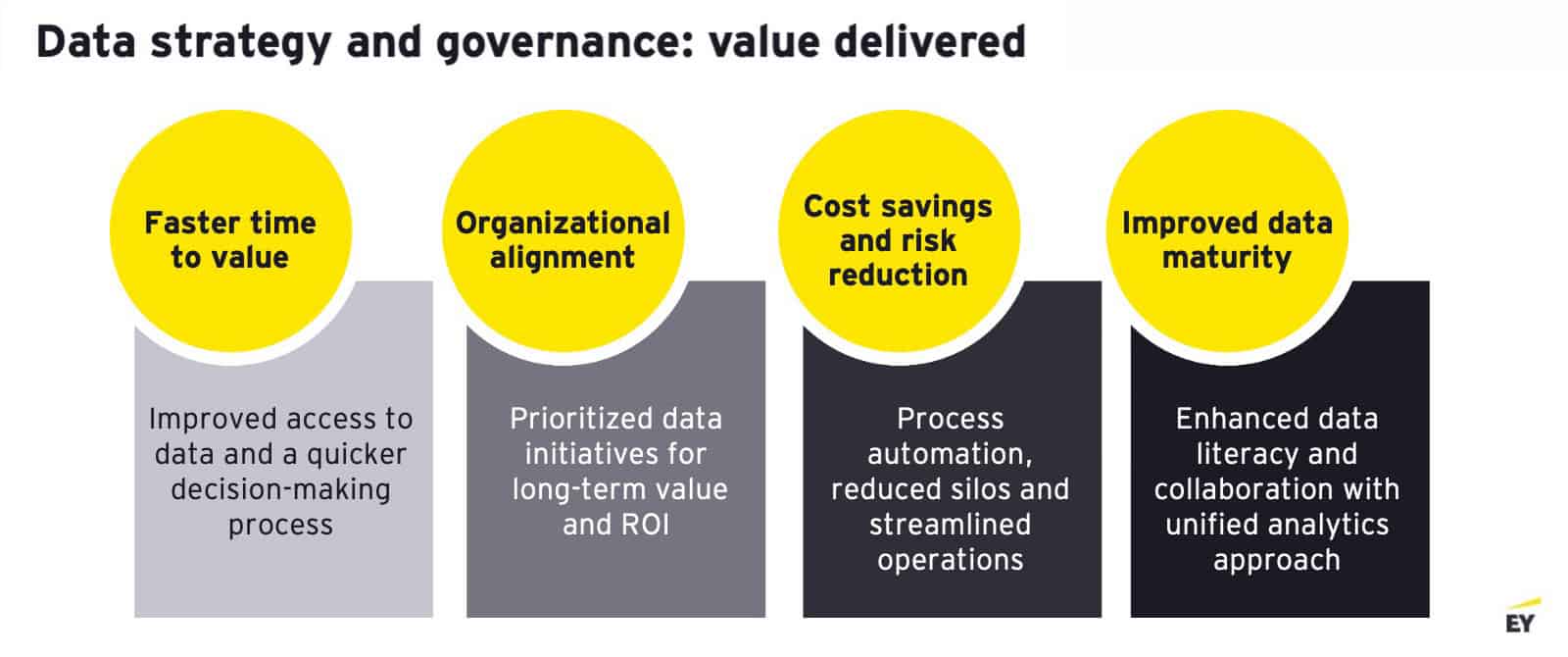
As this transformation unfolds, the company experiences immediate benefits. Engagement with business stakeholders increases, and there is a clear sense of direction in data initiatives. By aligning their data strategy with strategic business goals and investing in the right technology, they unlock value previously trapped in legacy systems.
The chemicals company’s experience exemplifies the importance of treating data as a strategic asset. By embracing change and fostering a culture of data-driven decision-making, they not only laid the foundation for future growth but also positioned themselves to capitalize on new opportunities in an ever-evolving landscape. Their story serves as a powerful reminder that with the right mindset and strategy, organizations can turn their data challenges into catalysts for success.
Key Learnings: Establishing a robust data management operating model is crucial for creating a scalable foundation that aligns with strategic business goals and promotes a culture of data-driven decision-making. It’s also essential to build solutions around the data currently available, even if it isn’t perfect, rather than waiting for flawless data before taking action.
Transforming Data, Realizing Value: Quick Wins in a Long-Term Strategy
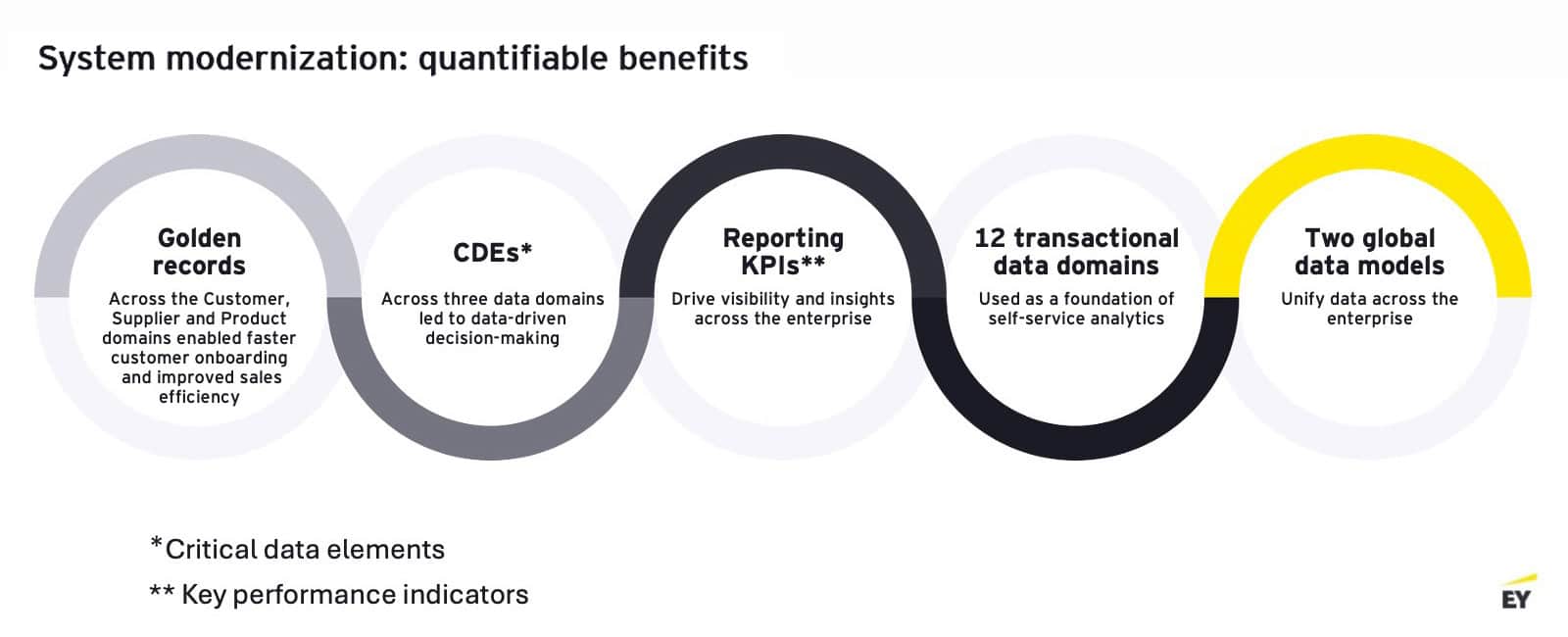
Faced with the challenge of consolidating over 70 legacy systems, a leading water management company embarked on an ambitious project to unify these disparate systems into a single, streamlined solution. The stakes were high, as the company had invested millions in a new enterprise resource planning (ERP) system, but the true value of that investment remained untapped, waiting to be unlocked through effective data management and analytics.
As it began this ERP overhaul, the company quickly realized that merely replacing old systems wouldn’t suffice. They needed a strategy that enabled real-time access to and use of their data, even during the transition. This realization led to a pivotal decision: to implement a unified layer of analytics that would connect their legacy systems with the new ERP system.
The project commenced with a focus on user experience. The company introduced a dashboard that provided employees with seamless access to data, regardless of its source—whether from the legacy systems or the new ERP. This innovative approach allowed users to continue their work without interruption, as the outdated systems were phased out, enabling them to derive insights and make informed decisions without waiting for the entire ERP consolidation concludes.
“By prioritizing data accessibility and fostering a culture of analytics, the water management company not only navigated its transformation successfully but also positioned itself for future growth.
As the project progressed, the company experienced a shift in mindset. It moved away from the traditional waterfall approach, where analytics was often an afterthought, and instead made data a central component of its strategy. This proactive approach allowed the company to realize value almost immediately, achieving 80 percent to 90 percent of its desired outcomes even before the full implementation was completed.
The benefits were clear. The company enhanced the visibility of inventory management across its manufacturing sites, facilitating better planning and resource allocation. The company leveraged its data to drive operational efficiencies and enhance decision-making processes, all while maintaining a focus on the ultimate goal of achieving a fully optimized ERP system.
This water management company’s journey exemplifies the power of innovative thinking in addressing complex challenges. By prioritizing data accessibility and fostering a culture of analytics, the company not only navigated its transformation successfully but also positioned itself for future growth.
Key Learning: Implementing a unified layer of analytics enables companies to access and leverage data in real time, effectively bridging the gap between legacy systems and new technologies.
Embracing AI for a Modern Workforce
The journey at this global manufacturing company began with a leadership change, marked by the arrival of a new chief information officer (CIO) who recognized the urgent need for ERP modernization. With a significant overhaul of ERP on the horizon, the company faced the challenge of integrating numerous legacy systems across its manufacturing and distribution operations in North America. The imperative was clear: how could the company modernize its digital capabilities to keep pace with the evolving market?
The CIO quickly pinpointed a fragmented data ecosystem as a major obstacle, resulting from inadequate technology investments over the past decade. However, this realization also revealed numerous opportunities for innovation across various business functions, including aftermarket service, sales, warranty, and supply chain. The focus shifted to two critical objectives: building an enterprise data platform to enable a data-driven culture and incorporating AI into daily decision-making processes.
Initial plans for the AI strategy began to take shape during an innovation session, where the leadership team envisioned an AI platform as a tool for the company to learn and apply AI to its daily operations. This vision generated excitement and ownership around the initiative, marking the start of a transformative journey aimed at harnessing AI’s potential while establishing a robust data foundation.
“Motivated by the potential for a more conversational interface, the manufacturer aimed to leverage GenAI to streamline and improve service delivery.”
As planning progressed, the company’s existing structure required a careful approach to bridge the gap between employees and leadership, often from different geographies. Additionally, the implementation of AI tools required multilingual support to accommodate leaders who preferred communication in other languages. This dual focus on culture and language was essential for fostering acceptance and engagement.
As a manufacturing entity, the organization also grappled with the complexities of fragmented IT systems and siloed operations. Change management became a crucial aspect of the deployment, as building trust in the new systems proved challenging. It was recognized that without intentional investment in internal buy-in, the rollout could face roadblocks.
To empower the workforce, practical AI solutions were introduced to enhance daily operations. Simple yet effective use cases, such as summarizing virtual meetings and drafting emails, demonstrated the immediate benefits of AI integration. For instance, finance leadership leveraged the platform to analyze financial data securely, enabling quicker identification of gaps and opportunities. These early successes demonstrated the value of AI, fueling momentum for long-term initiatives and reinforcing the commitment to digital transformation.
Key Learnings: Successful AI integration requires strong cultural alignment, intentional change management, and practical applications that empower employees to embrace new technologies.
Revolutionize the Dealer Experience
This manufacturer’s story highlights proactive investment and strategic foresight. Over the past decade, the company has established a robust data foundation, cultivating a best-in-class ecosystem for managing connected products and fleet operations. With a high position on the data maturity scale, the company recognized the potential of generative AI (GenAI) to enhance its offerings, particularly in fleet management and aftermarket growth.
The rise of GenAI prompted leadership to explore how these technologies could transform the dealer experience. Although existing digital applications were effective, service technicians faced challenges navigating multiple screens for troubleshooting. Motivated by the potential for a more conversational interface, the company aimed to leverage GenAI to streamline and improve service delivery.
This intentional approach to innovation was reflected in the development of a service technician application that uses legacy knowledge documents and service manuals. By simplifying processes and enhancing customer service, the goal was to demonstrate the value of AI to leadership and secure further investment for scaling these initiatives.
Continuous feedback loops with the dealer network underscored the importance of customer-centricity. The company recognized that a strong advisory board could facilitate direct communication, ensuring dealer insights were integrated into the development process. This collaborative approach defined success criteria and fostered a sense of ownership among dealers, enhancing the overall experience.
There was also acute awareness of the need for responsible AI deployment. As the manufacturer embraced GenAI, it prioritized data security and governance, establishing guardrails to mitigate risks associated with external rollouts.
As with any transformative initiative, challenges arose. The complexity of coordinating cross-functional teams and managing diverse stakeholder expectations necessitated an iterative approach. By piloting solutions early and gathering feedback, the manufacturer ensured that innovations aligned with user needs and expectations.
Key Learnings: Leveraging AI for growth requires a customer-centric approach, continuous feedback loops, and a commitment to responsible innovation that addresses both opportunities and risks.
Conclusion
Organizations increasingly recognize the vital role of effective data management and analytics. Embracing modern technologies like AI and unified analytics enables companies to drive value through operational efficiencies. As they navigate the future, companies should consider how their data strategies can not only yield immediate results but also shape their long-term vision and purpose. M
The views reflected in this article are those of the authors and do not necessarily reflect the views of Ernst & Young LLP or other members of the global EY organization.
About the authors:

Faisal Alam is EY Americas industrials and energy technology leader.

Farooque Munshi is EY Americas data and AI advanced manufacturing leader.

Gundeep Singh is principal, industrial products, Ernst & Young LLP.

Ellen McNally is manager for EY US technology consulting. She contributed to this article.