Survey: GenAI Adoption Surges In Manufacturing

MLC’s new Industrial AI survey also shows that 61% believe that AI will be a game-changer for the industry by 2030.

KEY TAKEAWAYS:
● 90% of manufacturers surveyed say they will increase generative AI usage in the next two years. Similar growth is expected for traditional AI tools.
● 67% say their companies now have a corporate AI strategy.
● But manufacturers are at an early stage on the maturity curve in their use of all types of AI systems.
Manufacturers are embracing artificial intelligence technologies aggressively and are now widely deploying generative AI tools such as ChatGPT in many facets of operations.
At the same time, older AI technologies such as statistical analysis and business intelligence products are also slated for increased adoption in the years ahead.
But even as the AI wave builds in manufacturing, most manufacturers say they are at an early level of maturity in their use of AI software as they struggle with data quality and workforce skills issues and anticipate reductions in headcount as a result of AI adoption.
These are some of the key findings of the Manufacturing Leadership Council’s new survey on Industrial AI. The survey covered the status of generative AI and traditional AI tool adoption; manufacturers’ strategies with AI and how they are organizing around the AI opportunity; expected benefits, challenges and impact of AI; and what the future may hold with the technology.
Status of GenAI
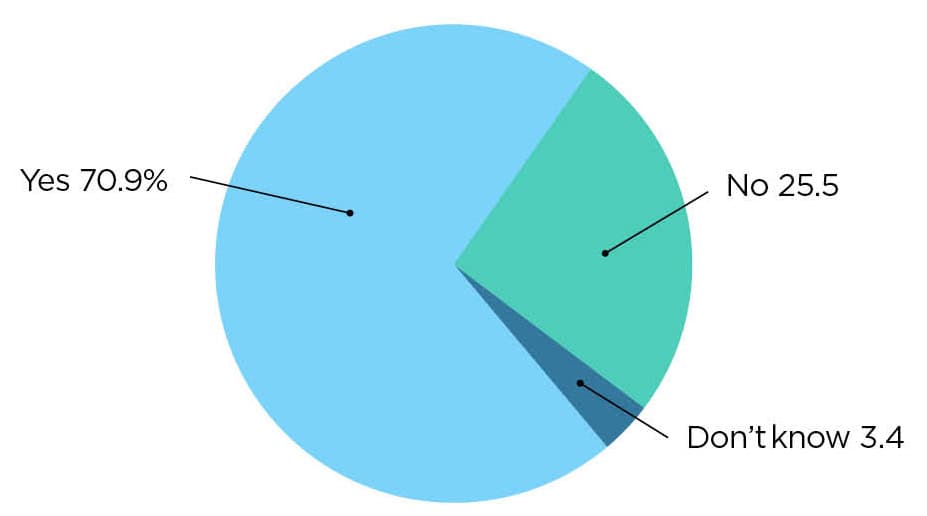
Today, more than 70% of manufacturers surveyed say they are currently using generative AI products such as OpenAI’s ChatGPT and Microsoft’s Copilot (Q1). This finding is up more than 24 points since MLC’s last general AI survey in 2024, when 46% said they were already using the technology.
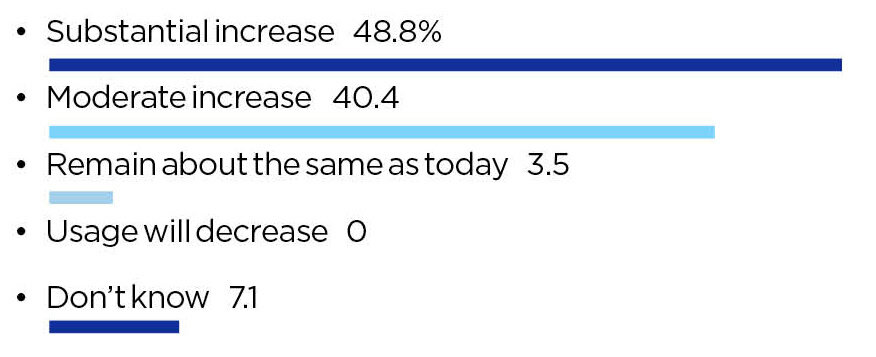
Even more impressive is that nearly 90% of those taking this year’s survey said they would increase generative AI usage in the next two years, with nearly 49% indicating a “substantial” increase (Q2), up from 35% in 2024.
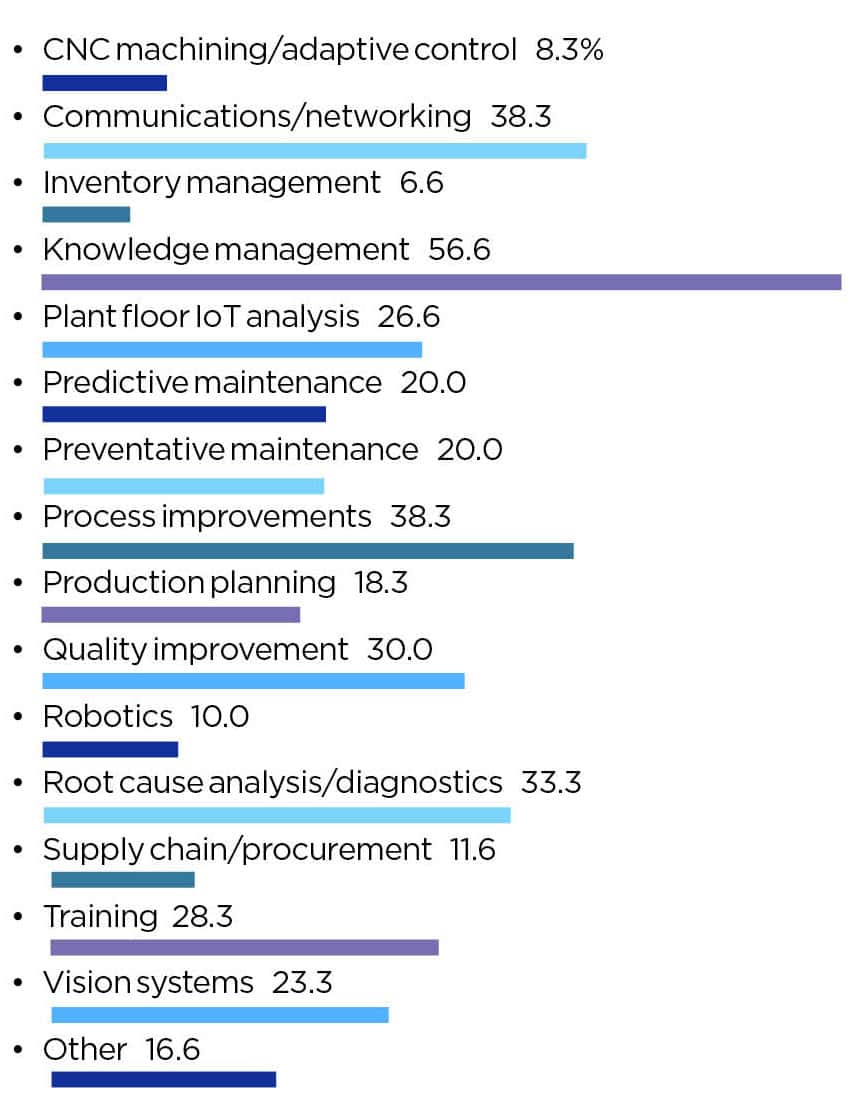
Interestingly, manufacturers are applying GenAI in many operational functions. Across 15 operational functions surveyed, double digit responses were collected in almost every category, with knowledge management, process improvements and root cause analysis/diagnostics leading the pack (Q3).
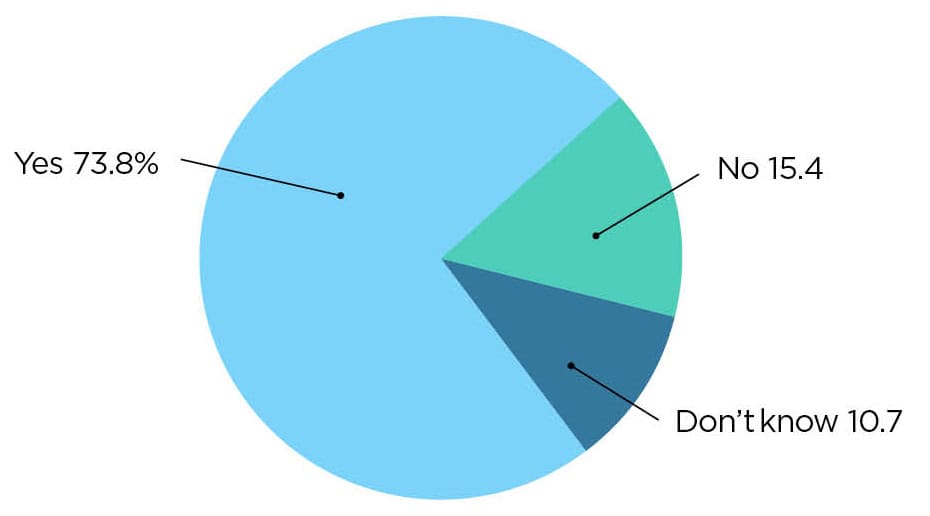
Importantly, governance over GenAI has clearly surged. Nearly three quarters of respondents this year, 73.8%, say they are selecting GenAI tools pursuant to a corporate policy (Q4), up substantially from the 52.7% who said such a policy was in place in 2024.
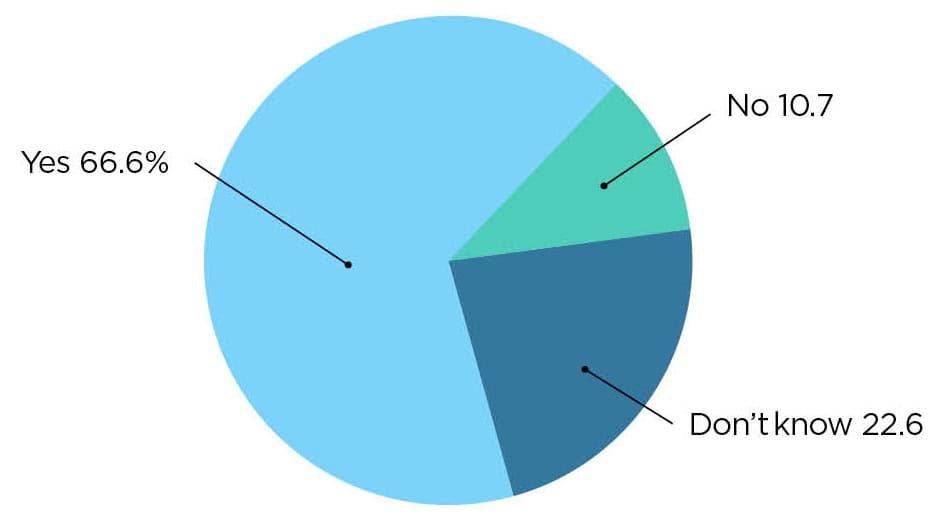
Looking ahead to the use of other, advanced forms of AI, 66% of respondents say they are either currently using or plan to use agentic AI tools in their manufacturing operations(Q5). Agentic AI systems are capable of autonomous decision making.
1. A Strong Majority Now Using GenAI Tools
Q: Are you currently using GenAI tools such as ChatGPT or Microsoft Copilot in manufacturing operations? (Select one)
2. Nearly 90% Plan to Increase GenAI Usage in Next Two Years
Q: What are your plans for GenAI tools in the next two years? (Select one)
3. Broad Use of GenAI Across Operational Functions
Q: In which areas have you implemented generative AI? (Select all that apply)
4. Strong Majority Has a GenAI Corporate Policy
Q: Has your company established a corporate policy on the selection and use of GenAI tools? (Select one)
5. Wave Seen for Agentic AI Tools
Q: Is your organization using or planning to use agentic AI tools in manufacturing operations? (Select one)
Overall AI Usage and Maturity Levels
AI has not only captured the imagination of manufacturers but also, evidently, their pocketbooks.
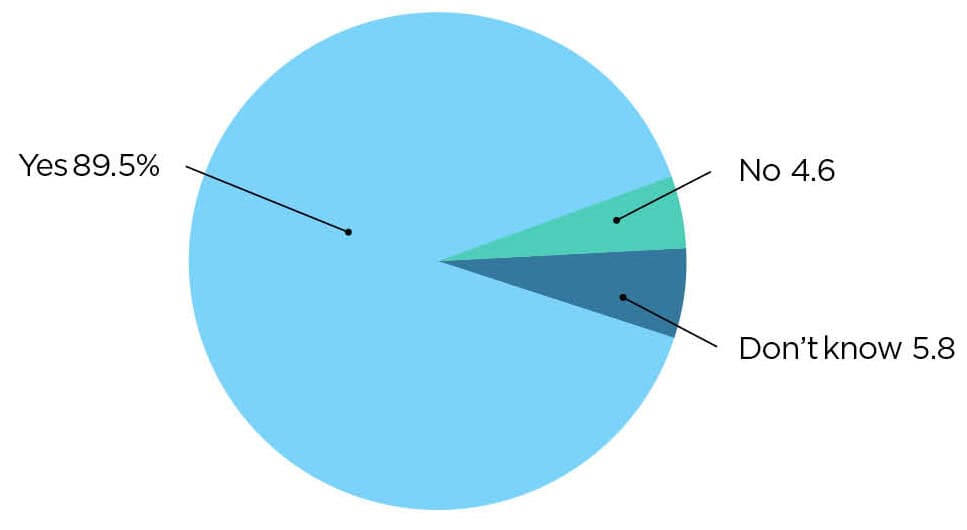
When asked about spending plans on all types of AI tools over the next two years, 89.5% of respondents said they are planning to spend more (Q6), compared with 78% saying so in 2024. Nearly one-quarter say that spending increases will amount to more than 30%.
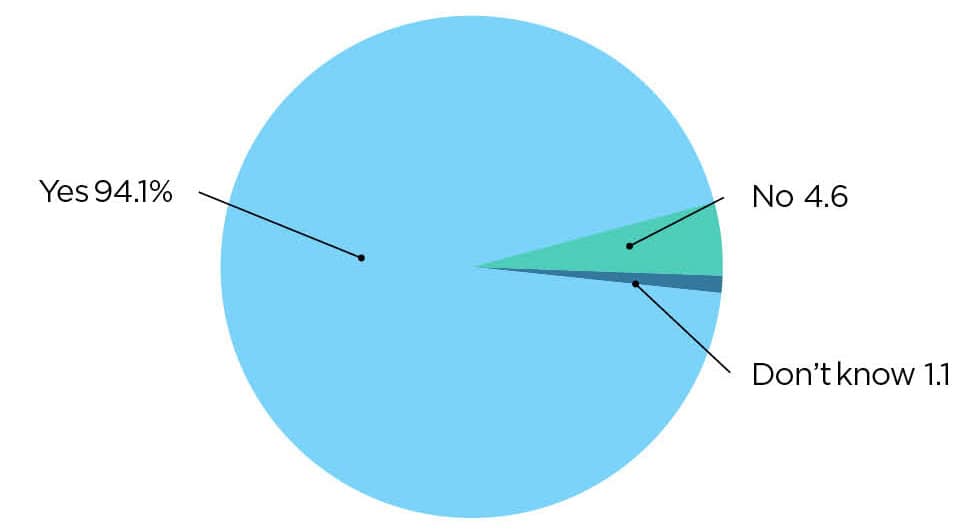
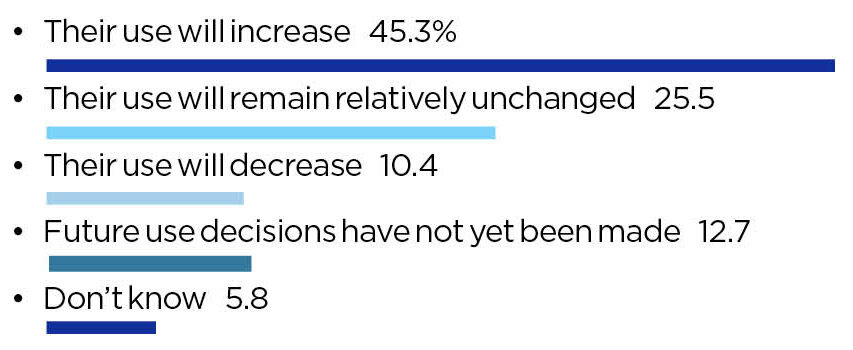
Use of traditional AI tools, such as statistical analysis, business intelligence and so-called power BI programs, has reached near universal proportions (Q7). This is not surprising given that nearly half of respondents have been using these tools for seven years or more. But the embrace of these tools will grow even tighter over the next two years, as 45% of respondents indicated their usage will increase in that timeframe (Q8).
But adoption, implementation and use don’t necessarily translate quickly into using these tools optimally. That takes time, education and training, and practice. As the survey indicates, the maturity curve is steep, and most manufacturers are in an uphill climb.
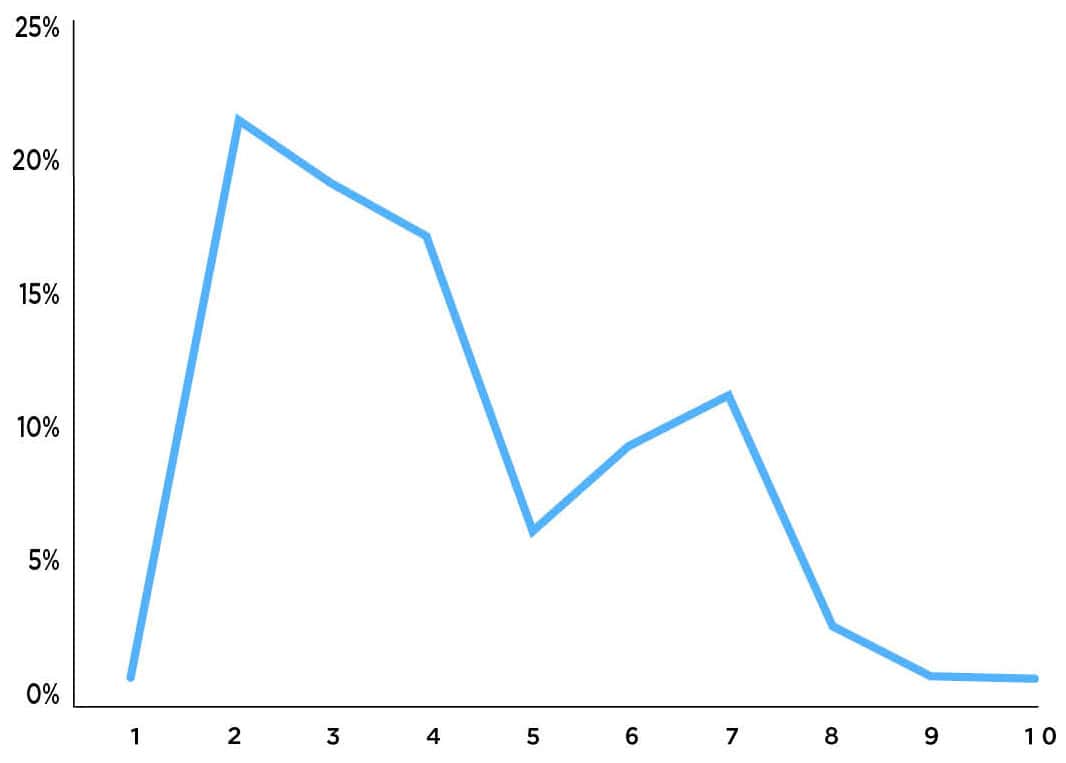
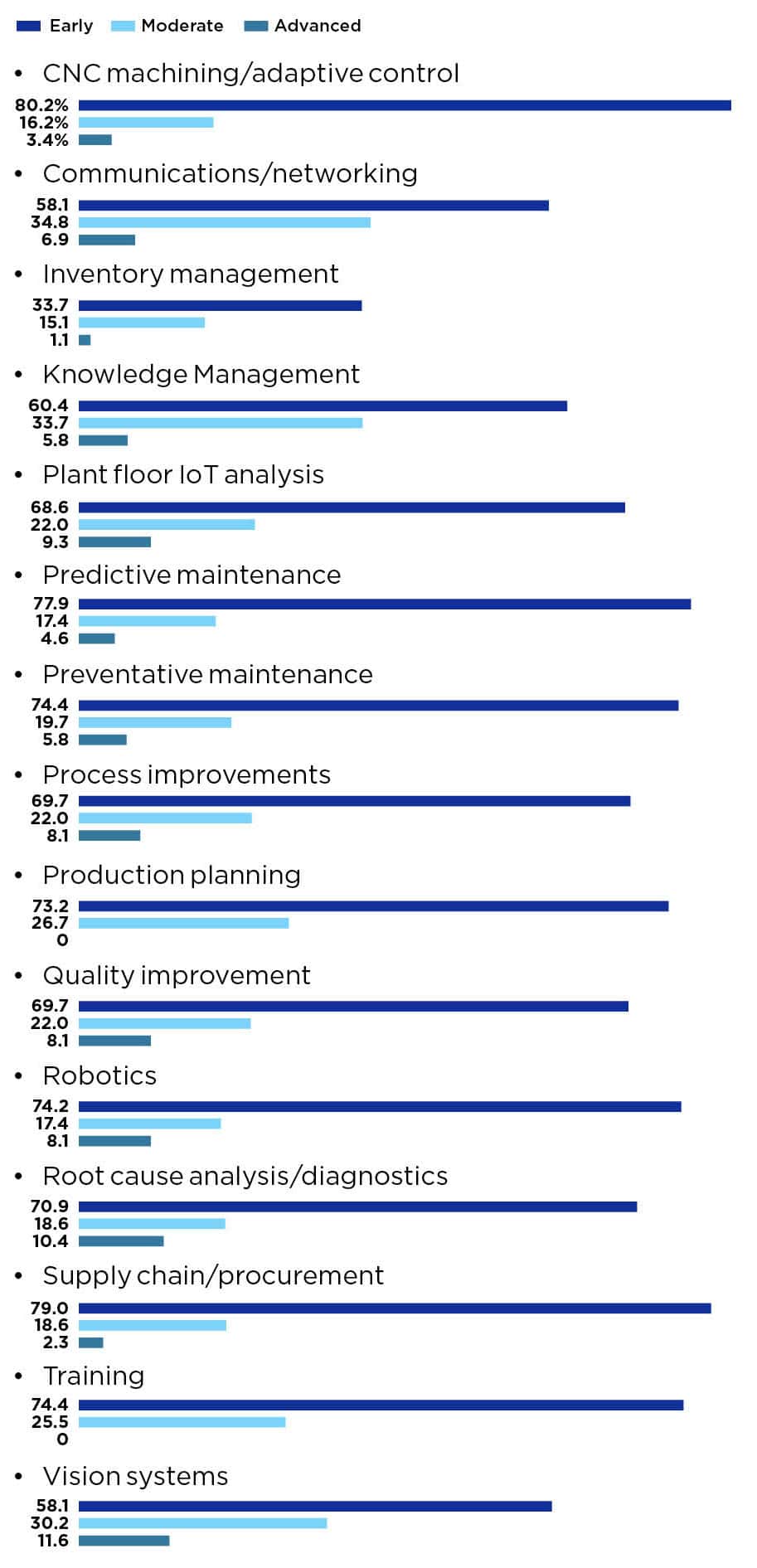
When asked to rate the maturity level of all AI usage in their manufacturing operations using a scale of one to 10, with 10 being the highest level of maturity, more than 75% of respondents placed themselves at below five on the scale (Q9). And when looked at through the 15 functional areas identified in the survey, the finding was reinforced—very few functional applications of AI are considered to be in an advanced state (Q10).
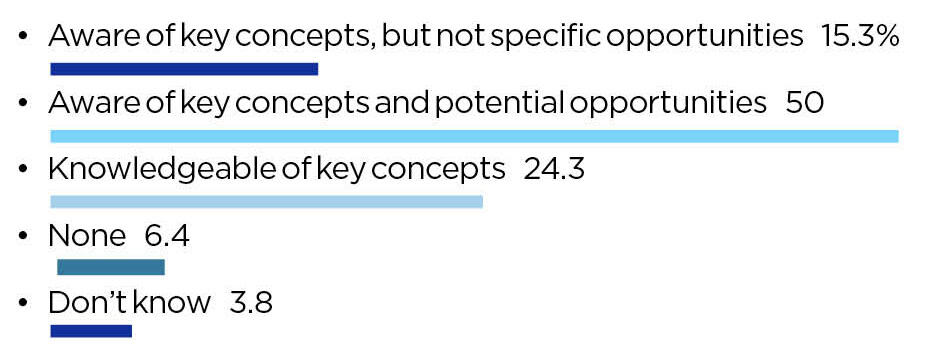
No doubt maturity levels are tied to knowledge and experience with AI, which MLC calls digital acumen. On this score, half of respondents, 50%, say their senior leadership team is aware of key AI concepts and potential opportunities with the technology (Q11).
6. Vast Majority Plan AI Spending Increases in Next 2 Years
Q: Does your company plan to increase spending on all types of AI tools in the next 12 to 24 months? (Select one)
7. Near Ubiquity in Use of Traditional AI Tools
Q: Has your company been using traditional tools such as statistical analysis products, business intelligence or so-called power BI software to analyze data from operations? (Select one)
8. Traditional AI Tools Slated for Greater Use in Next Two Years
Q: What are your plans for these tools in the next two years? (Select one)
9. More than 75% Indicate a Low Level of AI Maturity
Q: Overall, how would you characterize the present maturity of artificial intelligence usage in your company’s manufacturing operations? (Scale of 0-10, with 10 being the highest level of maturity)
10. Few AI Application Areas Are in an Advanced State
Q: How would you characterize the state of AI adoption in the following application areas in your factories and plants? (Select early, moderate or advanced for each)
11. Leaders Are Aware of AI Concepts, Opportunities
Q: What level of AI acumen does your senior leadership team have? (Select one)
AI Strategy and Organization
How well organized are manufacturers around the AI opportunity?
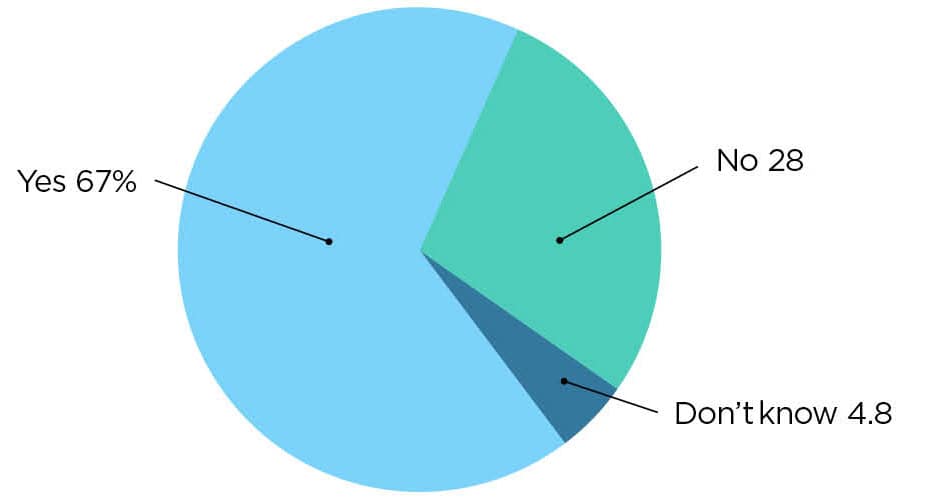
Overall, it appears that manufacturers are indeed doing a better job of getting their ducks in line for AI than they were just two years ago. Today, 67% say their companies have a corporate AI strategy (Q12). That’s up from 51% saying so in 2024.
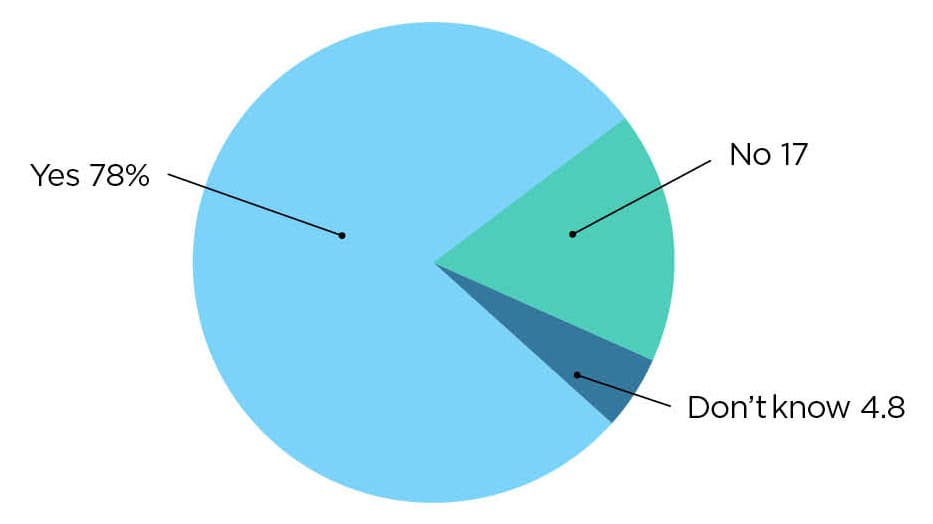
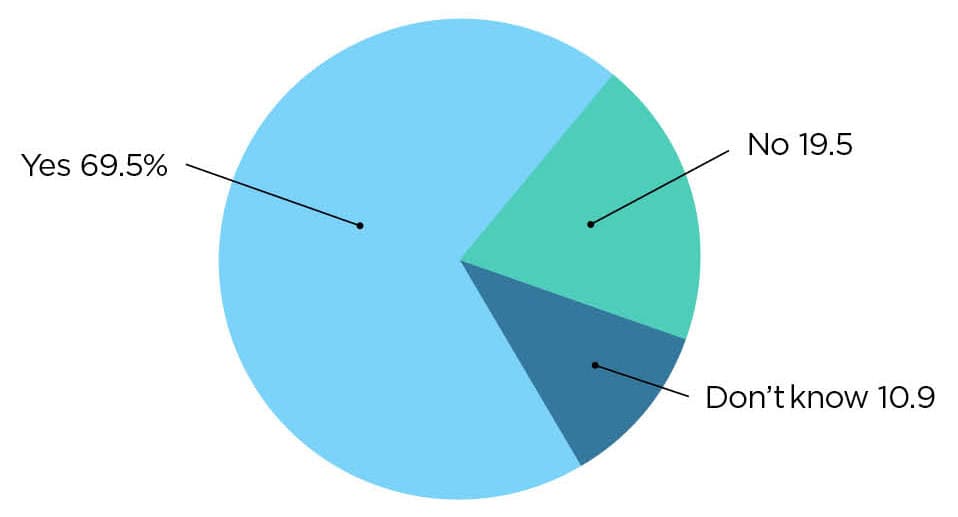
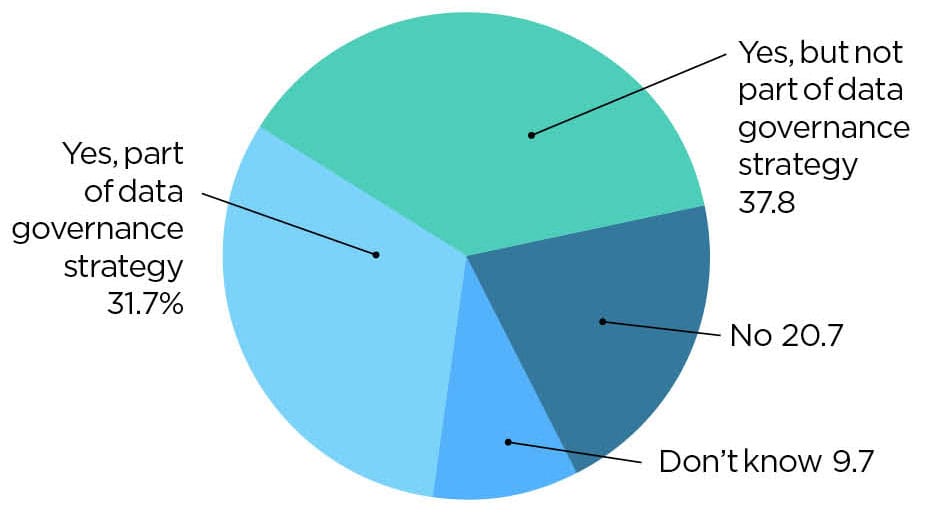
Strong majorities indicate that their AI strategies are linked to their companies’ digital transformation initiatives and business strategies (Q13,14). But there is considerably less linkage between AI strategy and data governance strategy, with only 31.7% saying the link between the two exists in their companies (Q15).
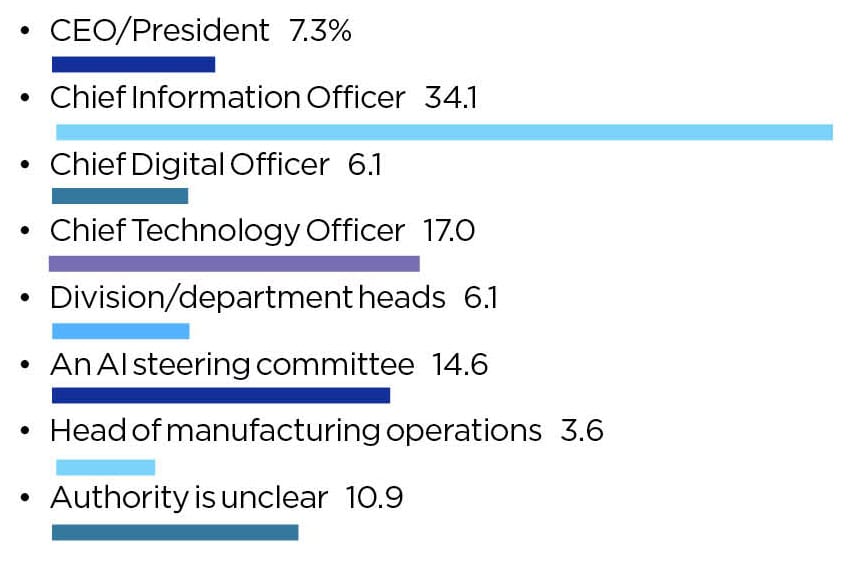
An area probed in this and in past surveys that remains perplexing is who or what department is in charge of AI initiatives. Over the years, including in the 2024 survey, the finding has been that authority is diffused among a battery of chiefs (CIOs, Chief Digital Officers, Chief Technology Officers), departments and committees.
This dynamic seems to still be in place. This year, the CIO is the most often cited authority, garnering 34% of respondents, up from 21% in 2024 (Q16). This may be a hopeful sign that greater clarity of organizational responsibility for AI is emerging, but the issue may persist as the cross-functional impact of AI plays out within companies.
12. Most Say They Have a Corporate AI Strategy
Q: Does your company have a corporate AI strategy? (Select one)
13. Clear Linkage Between AI and Digital Transformation
Q: Are your AI initiatives within manufacturing operations part of a larger digital transformation strategy for your company? (Select one)
14. Most Also Say that AI and Business Strategy Are Aligned
Q: Is your AI strategy linked to your company’s overall business strategy? (Select one)
15. Mixed Finding on AI/Data Strategy
Q: Do you have an AI governance strategy / process? Is it part of your data governance strategy or separate? (Select one)
16. AI Authority Remains Diffused
Q: Organizationally, who or what department is in charge of AI initiatives in your company? (Select one)
Expected Benefits and Impact of AI
As might be expected, aspirations regarding AI tend to be high, but certain common threads are evident when looked at through the lenses of expected business, operational and supply chain benefits.
These common threads include more predictive insights, better decision making and responsiveness. For example, more predictive insights were among the top three desired business benefits cited by respondents across all three areas surveyed (Qs 17,18,19).
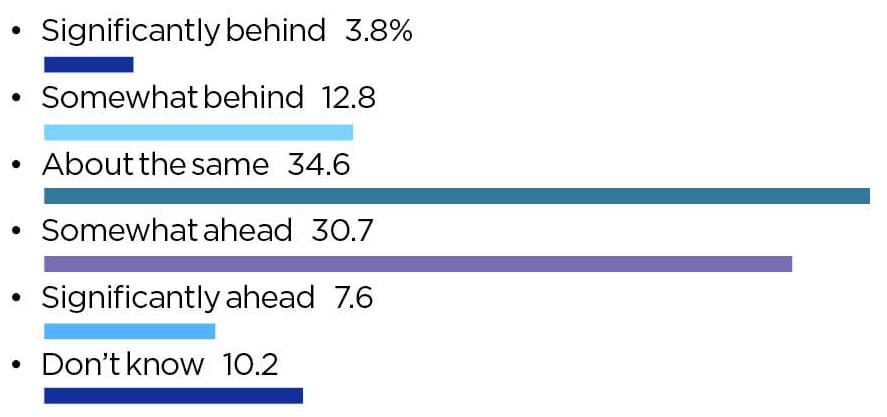
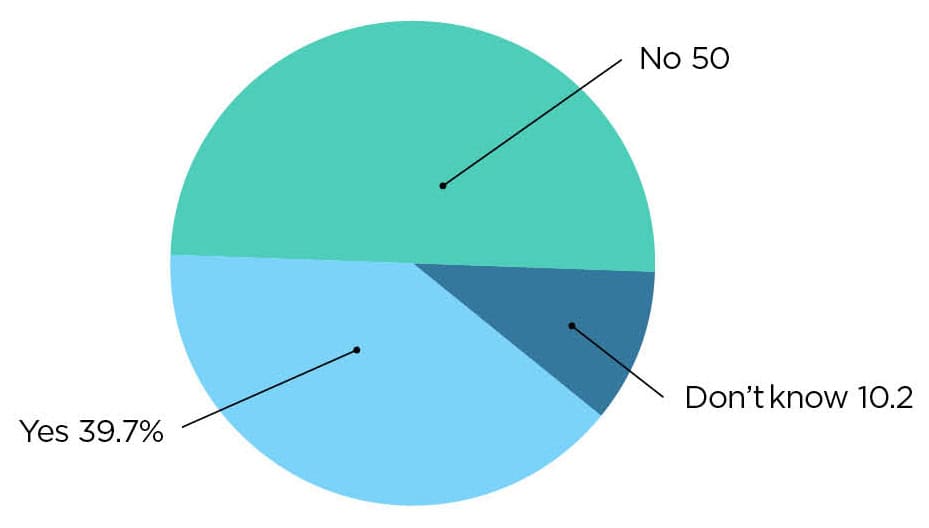
Regarding AI’s impact on competitiveness, about 38% of respondents believe that their company’s use of AI is ahead of key competitors, but a large share, 34%, think they are in the same boat with other companies (Q20). This finding should be viewed as somewhat speculative given that half of respondents admit that they don’t have a specific set of metrics in place to measure the effectiveness and impact of AI in operations (Q21).
17. Top 3 Desired Business Benefits from AI
Q: How would you assess the potential business benefits of AI in your company? (top 3 by highest potential)

18. Top 3 Desired Operational Benefits from AI
Q: How would you assess the potential benefits of AI in manufacturing operations? (Top 3 by highest potential)

19. Top 3 Desired Supply Chain Benefits from AI
Q: How would you assess the potential benefits of AI in your company’s supply chain? (Top 3 by highest potential)

20. More than One-Third Believe They Are Ahead of Competitors in AI
Q: Compared to your key competitors, how would you rate your organization’s current use of AI? (Select one)
21. Half Still Do Not Have AI Metrics
Q: Do you have a specific set of metrics to measure the effectiveness and impact of AI implementations in operations? (Select one)
AI’s Impact on the Workforce
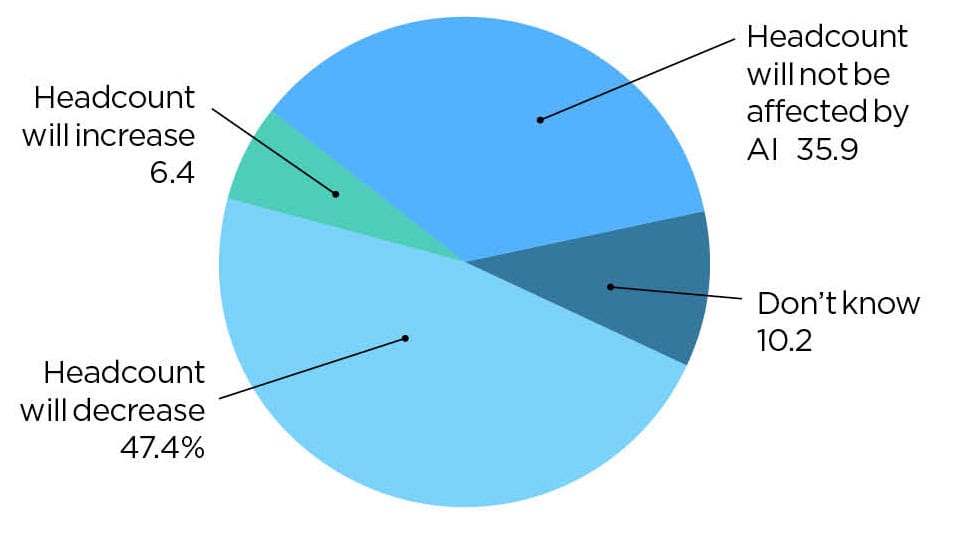
This year, manufacturers are anticipating a more pronounced impact from AI on their workforce levels than they were two years ago. When asked what impact AI will have on their factory/plant workforce headcount by 2030, 47.4% of respondents said they expect headcount to decrease (Q22), compared with 36% in 2024. The percentage of those expecting that headcount will not be affected by AI dropped to 35.9% this year, from 47% two years ago.
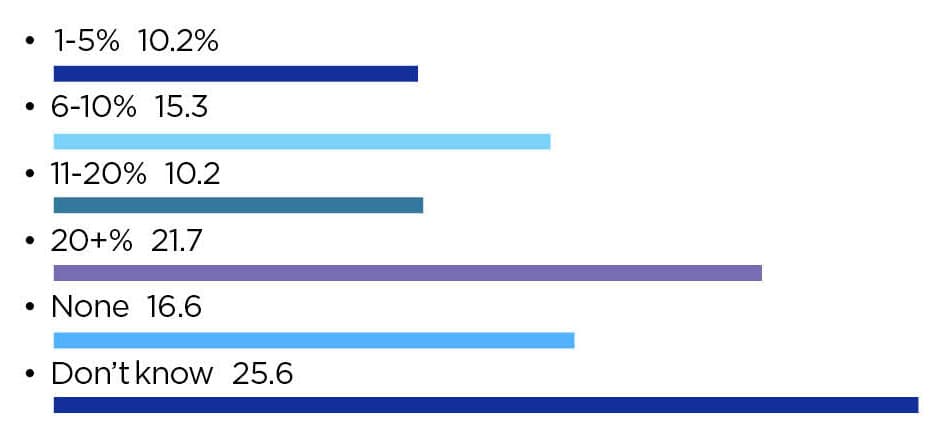
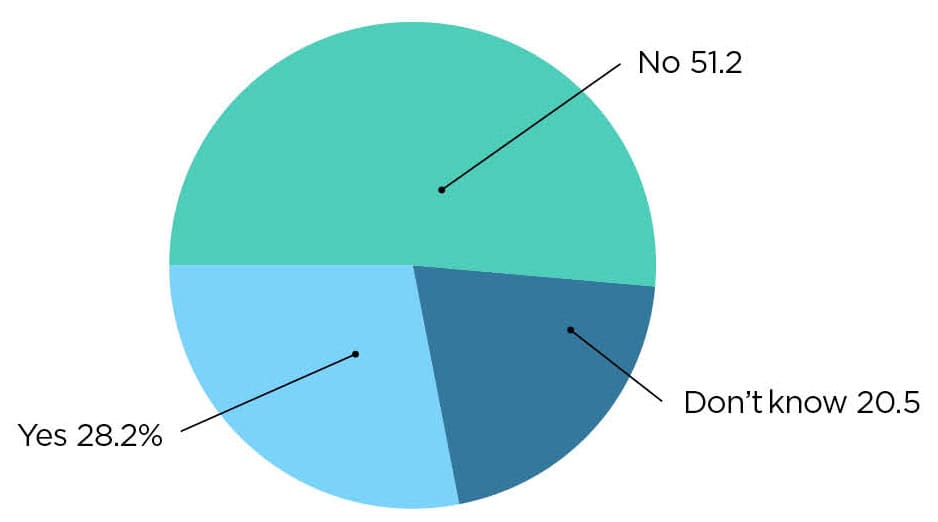
However, a majority, 57.4%, expect that those workers affected by AI will be re-trained or re-assigned to other jobs in their companies (Q23). What’s potentially troublesome about this finding, though, is that 51.2% say their company doesn’t have a dedicated budget for AI training and education (Q24).
22. More See Headcount Reductions Coming Due to AI
Q: What impact do you think AI will have on your factory/plant workforce headcount by 2030? (Select one)
23. Retraining/Reassignment Seen by a Majority
Q: If you expect some workforce displacement by AI, what percentage of those displaced do you expect to be retrained or reassigned? (Select one)
24. Most Do Not Have a Budget for AI Training
Q: Does your company have a dedicated budget for AI training and education? (Select one)
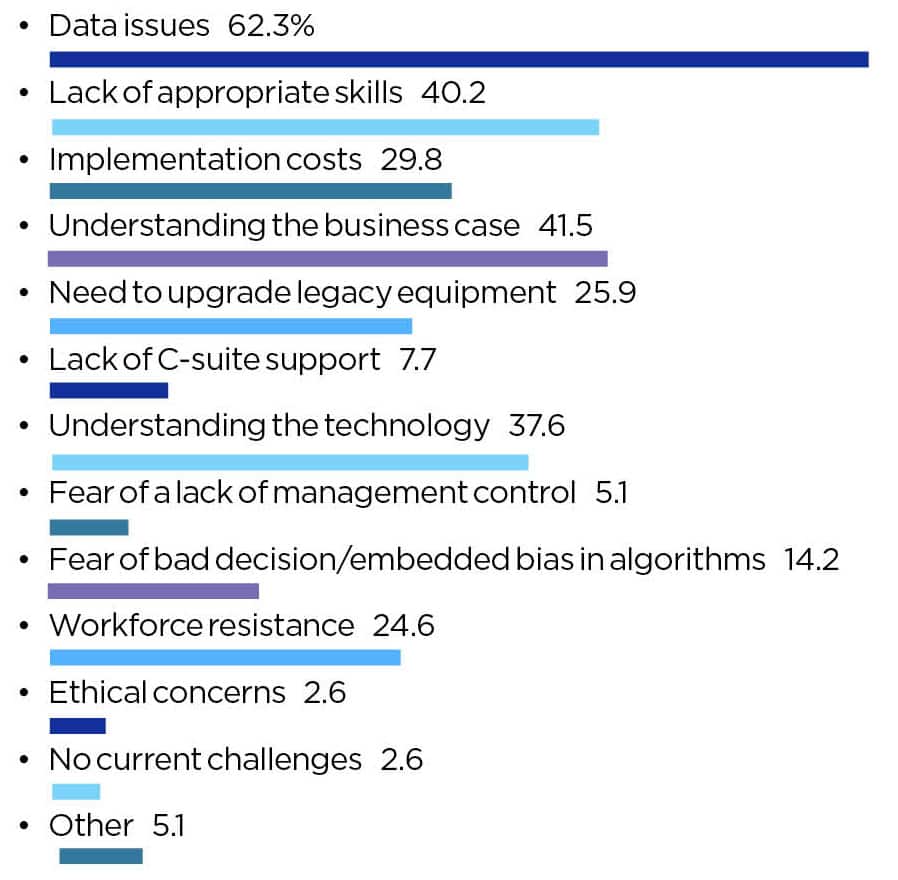
Challenges to AI Adoption
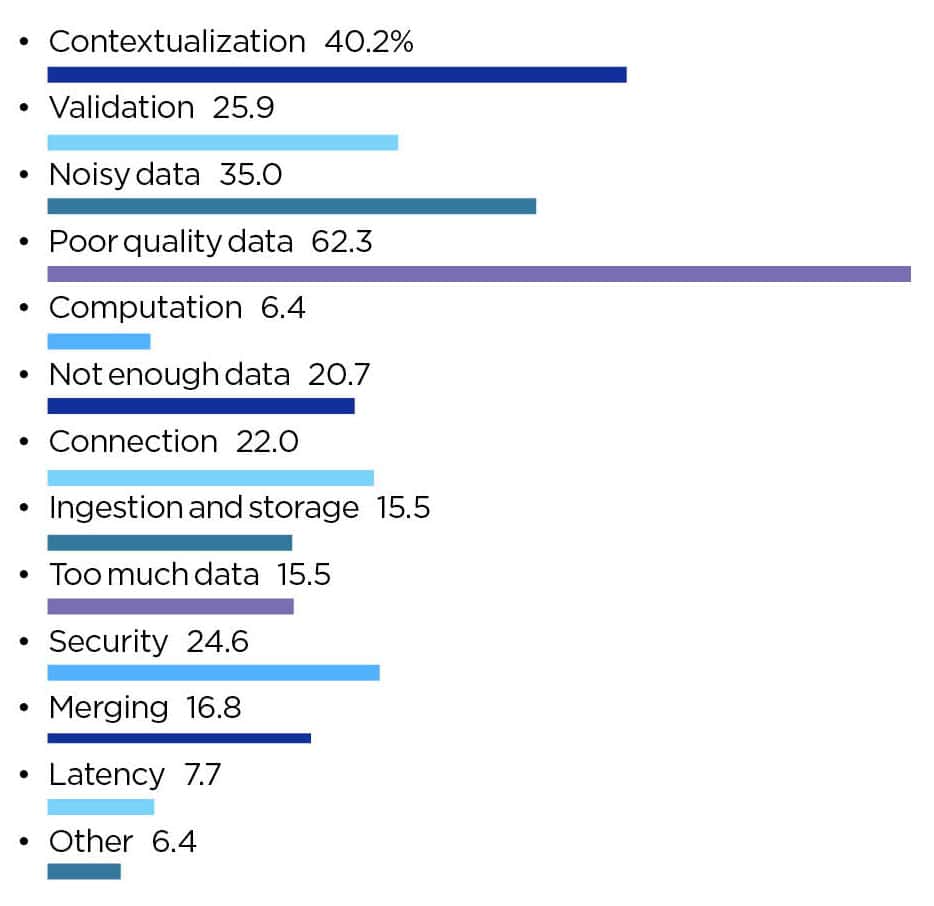
By a wide margin, data issues, including poor quality data and contextualization problems, continue to dominate challenges with AI adoption. Although the finding on data this year dipped slightly to 63.2%, from 68.2% in 2024, it still is more than 20 points ahead of the second biggest challenge—lack of appropriate skills in the workforce (Q25, 27).
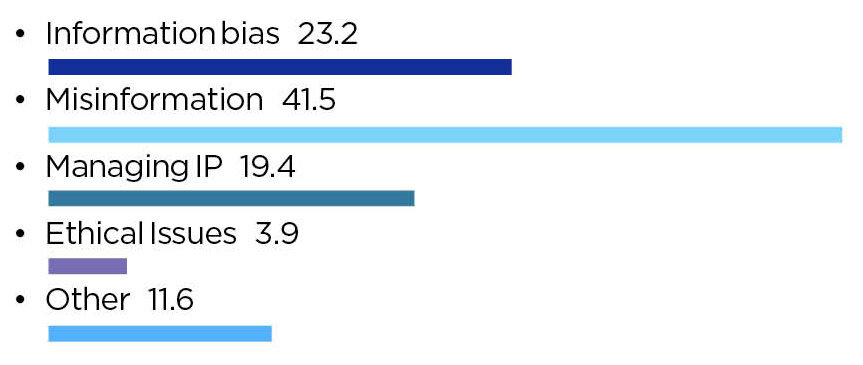
In assessing risks in using AI, respondents cited misinformation and information bias at the top of their list of concerns (Q26).
25. Data Issues Are by Far the Biggest Challenge With AI
Q: What do you see as the biggest challenges to AI adoption and use in operations? (Select top 3)
26. Misinformation is Seen as Biggest Risk
Q: What do you see as the most significant risk in using AI? (Select one)
27. Poor Quality Data is Biggest Concern in Operations
Q: What areas of working with AI-related data from operations are proving most challenging? (Select top 3)
Future Impact of AI
At the end of the day, just how significant of an impact do manufacturers think AI will have on the industry in the future? The question is important because it will drive behavior with the technology. If you don’t catch the wave, you could be drowned by it.
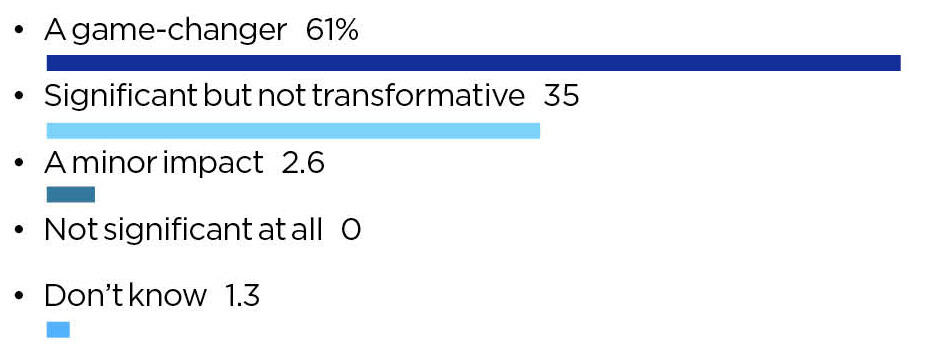
But manufacturers are becoming more convinced than ever that AI will be a “game-changer” for the industry and for them, with 61% of respondents in this camp, up from 55% in 2024 (Q28).
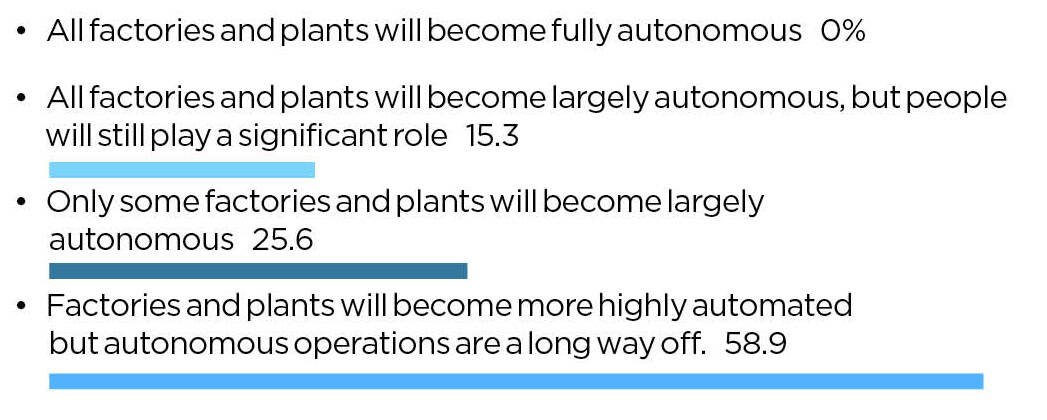
And what’s the end game in terms of the future state of factories and plants by 2030? Although no one expects that all of their factories and plants will become fully autonomous by that time, 40%, according to this year’s survey, expect some degree of autonomy to take hold in the years ahead (Q29). M
28. Solid Majority Sees AI as a ‘Game-Changer’ by 2030
Q: Ultimately, how significant an impact will AI have on the industry by 2030 and beyond? (select one)
29. 40% See Some Degree of Autonomy in the Future
Q: What statement would best describe your expectation about the future state of factories and plants as a result of the use of AI by 2030? (Select one)
About the author:

David R. Brousell is the Founder, Vice President and Executive Director, Manufacturing Leadership Council