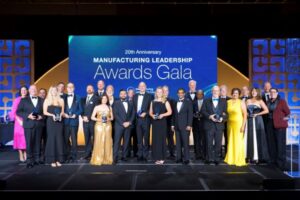
Meet the Manufacturing Leadership Council
How is digitization changing manufacturing? What can manufacturers do to stay competitive in a fast-shifting world? What does the future look like—and how can leaders prepare for success?
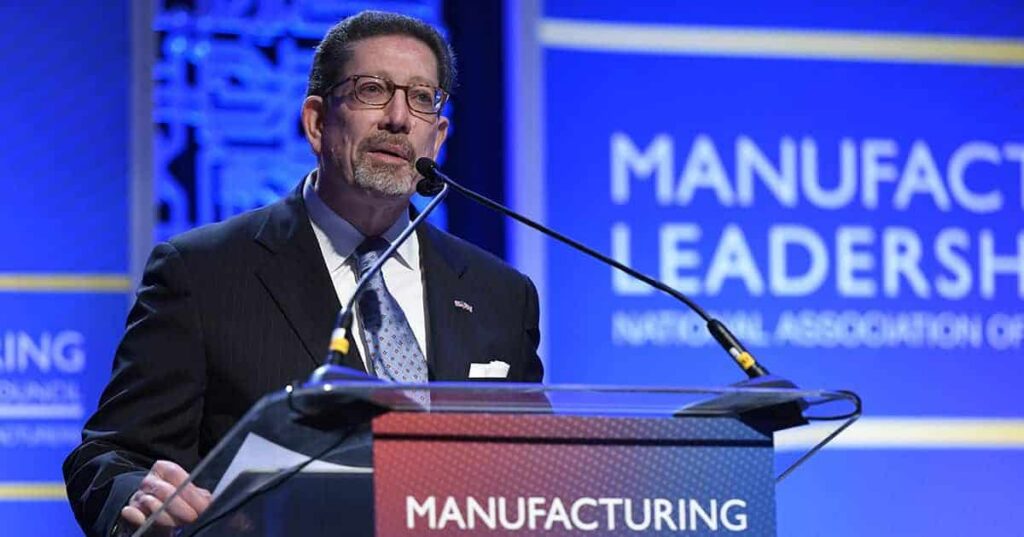
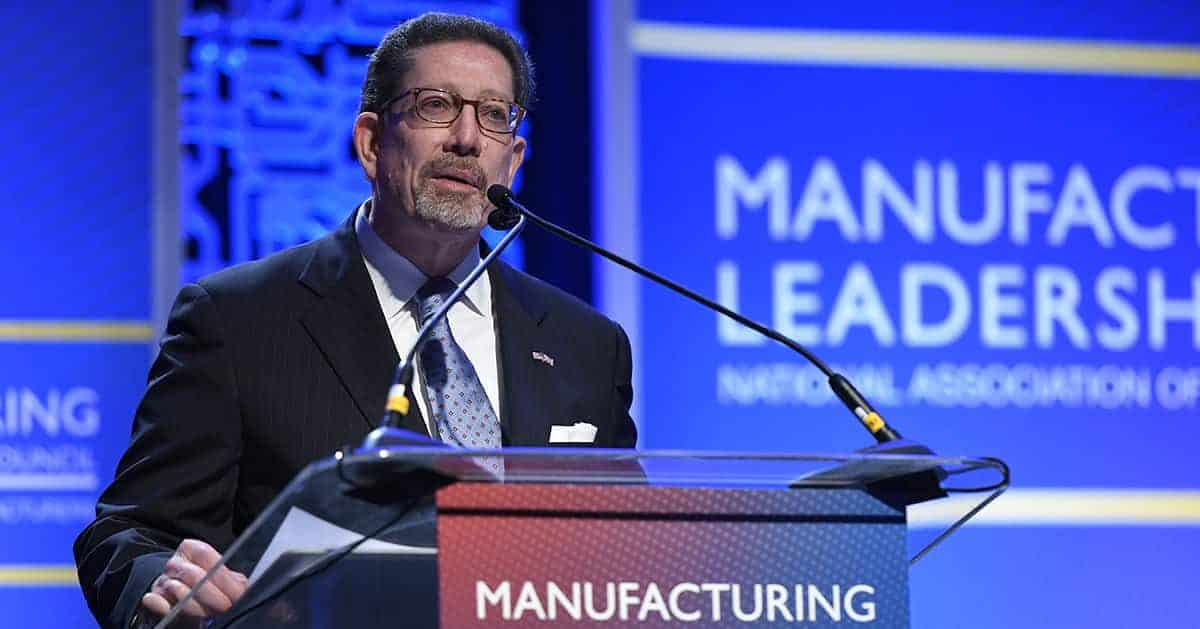
Those are the kinds of questions being asked and answered by the NAM’s Manufacturing Leadership Council—a member-driven global business leadership network focused on the intersection of manufacturing and technology. We spoke with David R. Brousell, MLC co-founder, vice president and executive director, who gave us more insight into what the MLC is, how it works and why it matters today more than ever.
An early start: The idea for the MLC was born nearly two decades ago, when manufacturers began turning to consumer technologies to strengthen their businesses.
- The convergence of these technologies with traditional operational technologies on factory floors sparked an idea. Brousell, who was running a publication called “Managing Automation,” recognized the trend—which he called “Progressive Manufacturing”—and founded an annual conference for manufacturers to discuss new approaches and best practices for the future.
- By 2008, that conference had given rise to a council designed to offer useful programming for manufacturers on the future of digitization. Ten years later, the council became a part of the NAM.
- “We realized that digitization was not a tactical or small change—it was a fundamental change in the industry,” said Brousell. “It was clear that manufacturers needed an informational resource or organization to bring them together to deal with what we now call Manufacturing 4.0 in a systematic way.”
A systematic approach: Today, the MLC represents what Brousell calls “the digital transformation arm of the NAM,” helping manufacturers meet future needs and address ongoing trends—through changes in technology, organization and leadership.
- “The transition to the digital model of manufacturing is only one part technical,” said Brousell. “The harder part is changing the organizational structure to be more collaborative and decentralized and making the leadership approach digital-first. We’re probably the only organization that has looked at it this way, in a systematic way, beyond technology alone.”
A critical focus: Every year, the MLC lays out a member-approved set of critical issues involved in the transition to Manufacturing 4.0 and offers resources and programming from thought leadership to plant tours to the Rethink Summit.
- This year’s critical issues include topics like factories of the future; transformative technologies, including AI and machine learning; augmented reality and virtual reality; Manufacturing 4.0 cultures; and cybersecurity.
A broad view: Digitization isn’t just an issue for individual manufacturers. Because manufacturing is so vital to economic and societal growth, it’s also important to the future of the United States and the world.
- “Manufacturing is one of the fundamental drivers of social and economic prosperity,” said Brousell. “Its growth will lead to a better life for people. No other industry can say that. And I believe that the countries whose companies are most successful in making the transition to the digital model are going to be the powers of this century. There’s a lot riding on this.”
Sign up: Come learn from leading manufacturers at the Rethink Summit, June 27–29, in Marco Island, Florida. It’s the premier event for senior operational executives and their teams as they continue to navigate disruption.