
News and Insights

Dialogue: M4.0 Leadership from a Digital Champion
October 1, 2023Johnson & Johnson’s Bart Talloen says supply chain can be a competitive advantage through digital innovation, customer-centric solutions, and real-time alignment. He urges manufacturing leaders to stay curious, keep learning, and build broad collaboration networks.

Crystal Ball: Quo vadis, Industry 4.0 and digital transformation?
September 18, 2023In the latest in our Manufacturing in 2030 Crystal Ball series, we look at where Industry 4.0, transformation and digital value creation are headed
Industry 4.0 is reshaping manufacturing with smart, connected factories, mass customization and product-as-a-service models. It helps companies move production closer to customers, improve efficiency and meet sustainability demands.
Johnson & Johnson’s Talloen Named Manufacturing Leader of the Year
June 29, 2023Johnson & Johnson’s Bart Talloen was named 2023 Manufacturing Leader of the Year for driving the company’s digital transformation across operations and supply chain. The Manufacturing Leadership Council also announced its 2023 award winners at its Florida summit.

How ALOM Triumphs in a Tight Labor Market
May 11, 2023ALOM boosted hiring and retention by investing in company culture, diversity, wellness and training, driving 70% workforce growth, 60% revenue growth and faster recruiting despite labor shortages.

Case Study: Johnson & Johnson’s Award-Winning Supply Chain Smart Factory
September 17, 2022Johnson & Johnson piloted a scalable smart factory strategy using data, analytics, and digital tools to improve agility, resiliency, and quality. The approach expanded from test sites to its global manufacturing network.
Pfizer’s Bourla Named Manufacturing Leader of the Year
June 30, 2022NAM’s Manufacturing Leadership Council named Pfizer CEO Albert Bourla its 2022 Manufacturing Leader of the Year for his company’s COVID-19 response and global vaccine distribution.

CASE STUDY: Flex Empowers Employees with LISA Avatar Assistant
May 20, 2022Flex’s avatar-based LISA assistant improves high-mix manufacturing by reducing changeover time 10.5%, line clearance 85%, and quality-related downtime 56% while helping employees succeed.
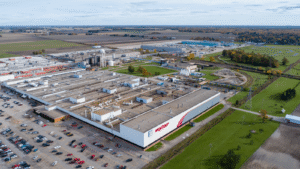
Nexteer Displays Advanced Manufacturing in Action
September 28, 2021Nexteer’s virtual plant tour showcased its Digital Trace Manufacturing system, which connects operations across 27 plants to track materials, improve efficiency and support advanced automotive production.

Hologic Supports Women’s Health via Innovation
September 2, 2021Hologic’s Costa Rica facility uses robotics, data analytics and talent management innovations to improve women’s health products, earning the company NAM’s 2021 Manufacturer of the Year award.

Dialogue: Hologic’s Winning Formula
August 10, 2021Hologic Costa Rica’s award-winning operation credits its success to balancing digital technology, operational excellence, and the right talent. VP Nilo Caravaca says this combination drives engagement, predictive analytics, compliance, and long-term performance.

“The Culture Is the Company”: An Interview with ALOM’s Hannah Kain
June 29, 2021ALOM’s Hannah Kain says manufacturing leaders must tackle supply chain disruptions and workforce development by investing in agility, digitization, and servant leadership.
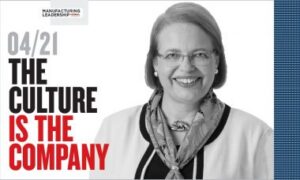
The Culture is the Company
March 30, 2021ALOM CEO Hannah Kain says manufacturing’s future depends on collaboration, agility, and servant leadership, while digitalization, near-sourcing, and stronger supply chains create new opportunities.
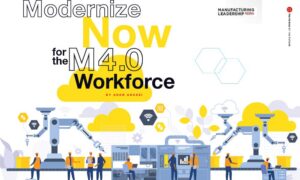
Modernize Now for the M 4.0 Workforce
February 1, 2021Manufacturers must modernize workforce systems, skills data, and HCM platforms to support smart factories and faster digital transformation. The future of manufacturing depends on technology-first operations and an agile, future-ready workforce.

Disruption Will Be Business as Usual
February 1, 2021ResMed’s Brendan Mullins says disruption will be the new normal, making resilient, agile supply chains and supply chain digitization top manufacturing priorities. He also highlights leadership, remote talent, and global manufacturing network resilience.

Supply Chain Disruption: Rethinking Resilience and Agility
August 7, 2020Industry leaders say supply chains need greater resilience and agility, with companies using digital tools, AI, automation, and modular manufacturing to respond to disruptions and shifting demand.
New Virtual Meeting Series Launches with 3M, GM and Protolabs Sharing COVID Response Stories
July 16, 20203M, GM and Protolabs shared how manufacturing agility, digital tools and rapid reconfiguration helped scale PPE and ventilator production during COVID-19. The virtual session highlighted lessons in supply chain visibility, safety and innovation.
