
COVID-19: A Catalyst for M4.0 Culture
The pandemic has spurred a paradigm shift in cultural transformation as manufacturing companies have leveraged M4.0 to accelerate digital adoption, collaboration, innovation, and integration across their enterprises, reveals the Manufacturing Leadership Council’s latest M4.0 Cultures survey.
By Sue Pelletier
It’s undeniable that the COVID-19 pandemic has caused massive disruption in the manufacturing environment over the past year. Supply chain disruption, already a growing problem pre-pandemic, became more acute as different areas of the world shut down to slow the spread of the virus. Some manufacturers pivoted to retool their factories to supply much-needed personal protective equipment (PPE) and other COVID-necessitated supplies, while others struggled to keep shop floor workers safe and learned on the fly how to manage employees who suddenly had to work remotely.
The impact on manufacturing cultures has been significant. The results of the Manufacturing Research Council’s latest M4.0 Cultures survey reveal that the abrupt shifts and continued disruptions of the COVID-19 crisis have driven leaders to sharpen their focus on M4.0 and accelerate adoption across everything from enterprise connectivity and corporate collaboration, to functional integration and innovation, and to start redefining what health and safety should mean for their employees in the future.
What’s more, while some of the workforce cultural changes, such as PPE and masking for front-line employees, may be temporary, the survey results clearly indicate that a major shift toward an M4.0 culture that is digitally enabled, collaborative, innovative, and data-driven is not only underway more rapidly than ever before, but is also here to stay.
There will continue to be a few bumps in the road ahead, of course. While corporate cultures are increasingly becoming more customer-centric and collaborative, the journey toward M4.0 is still a work in progress for many companies as concerns about the costs and ROI of M4.0 transformation, along with getting full buy-in from both employees and leadership, stubbornly continue to impede the progress of cultural changes. But it is clear that the COVID viral firestorm has made manufacturers acutely aware of the need to continue along that M4.0 journey. With many saying the recent changes in their corporate culture will now be permanent, it’s clear that they are already beginning to see the results, from improved morale and a more efficient workforce, to more productive and innovative operations. And those are exactly the kinds of benefits that will spur them to continue to overcome any remaining hurdles.
While it might be expected that the pandemic’s disruptions could have slowed the adoption of digital M4.0 plans, that turned out not to be the case. As leadership teams have intensified their focus on M4.0 over the past year (Chart 2), more than half said they have accelerated both enterprise connectivity and M4.0 technology adoption since COVID-19 hit (Chart 1). Corporate collaboration initiatives also sped up for more than 50% of companies, with ramped up functional integration strategies and faster innovation processes also reported by more than 40% of survey respondents.

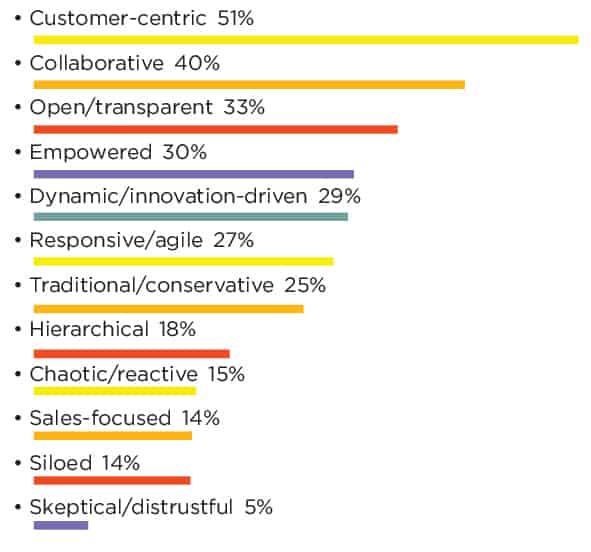
5 Corporate Cultures Increasingly Customer-Centric and Collaborative
Q: What term would you use to describe your company’s culture today?
6 Strong Majority Believe Culture Change Needed in Digital Era
Q: Thinking about the requirements of the digital age, does your company believe it needs to change its culture to embrace this new era?

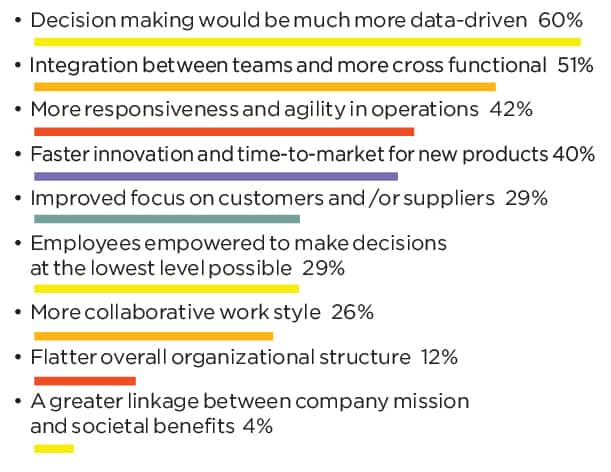
7 Data-Driven Decision-Making & Functional Integration Top Culture
Change Agenda
Q:If a culture change is needed, which description would best capture what that change would encompass?
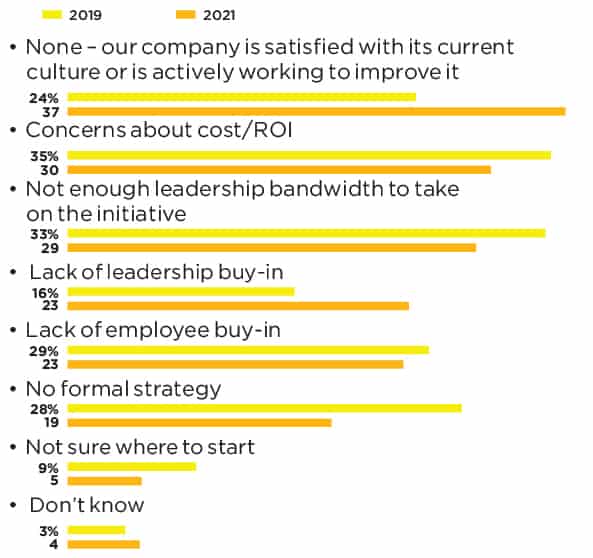
8 ROI Concerns & Leadership Bandwidth Remain Key Challenges to Change
Q: What are your company’s biggest challenges
to cultural change?
Part 3: Collaboration
9 51% Predict Collaborative Structures Will Dominate in 2 Years
Q: How would you describe your overall corporate structure today, and where do you expect it to be in 2 years’ time?

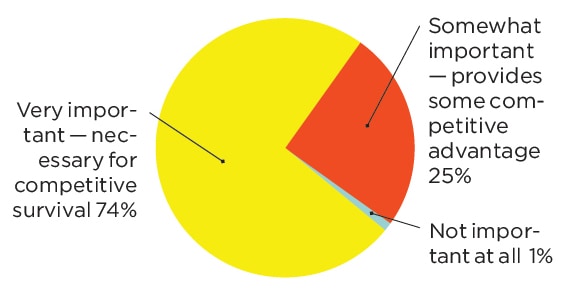
10 Three Quarters Say Collaboration is Essential to Competitiveness
Q: How important do you think a collaborative
culture is for competitiveness?
11 M4.0 Key to Enabling a Collaborative Culture
Q: Is there a clear belief that M4.0 technologies and approaches are key to enabling a more collaborative culture?

12 Extensive Adoption of Digital Threads Across All Functions in Last 2 Years
Q: Which of your company functions are connected to a digital thread to enable end-to-end data sharing and collaboration?

Part 4: Innovation
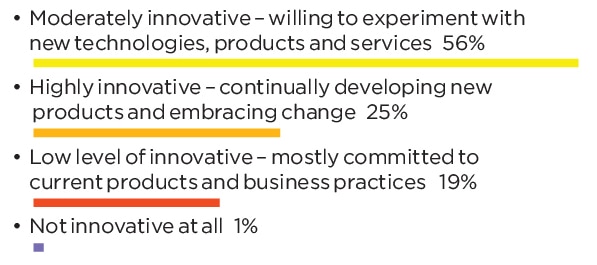
13 Three-Quarters Say They Are Already Moderately to Highly Innovative
Q:How would you describe your company’s current level of innovation?
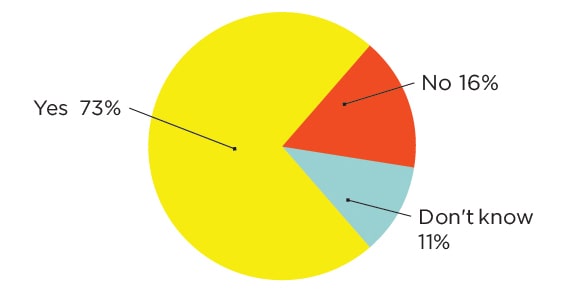
14 Almost Three-Quarters Believe M4.0 is Key to Driving Innovation
Q: Is there a clear belief that M4.0 technologies and approaches are key to enabling faster and more effective innovation?
15 Increasing Role for Employees & Suppliers as Source of Innovative Ideas
Q: Where does your company source its ideas for new products, processes, and/or business models?

Part 5: Integration
16 More Than a Third Have Significantly Integrated Organizational Structures
Q: To what extent has your company made changes to its organizational structure in order to create a more integrated enterprise?

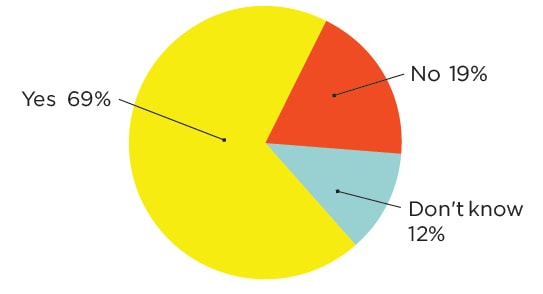
17 M4.0 Seen as Key to Enabling Integration
Q: Is there a clear belief that M4.0 technologies and approaches are key to enabling more integrated operations?
18 Increasingly Integrated OT & IT Teams in Last 2 Years
Q: How would you describe the level of
integration between your IT and OT teams?

19 Culture Change Remains Key Challenge to Successful Integration
Q: What are the most significant challenges to improving your company’s integration?

Survey development was led by Executive Editor Paul Tate, with input from the MLC editorial team and the MLC’s Board of Governors.