
News and Insights
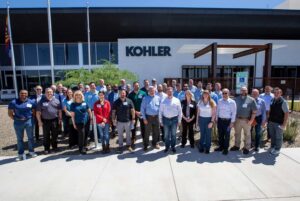
MLC Plant Tour: An Up-Close Look at Kohler’s OT/IT Integration
June 5, 2026MLC members toured Kohler’s new 1-million-square-foot Arizona smart factory, learning how OT/IT integration, wireless networking and automation support bathtub production and warehouse operations.

Building An AI Governance Framework for the Factory Floor
May 21, 2026AI governance doesn’t have to be overwhelming. Learn the five key pillars manufacturers need to confidently scale AI.

Dialogue: Building Rheem’s AI-Ready Future
May 18, 2026Joe Palomba shares how Rheem aligned leadership, process and data to build a connected AI-ready enterprise.
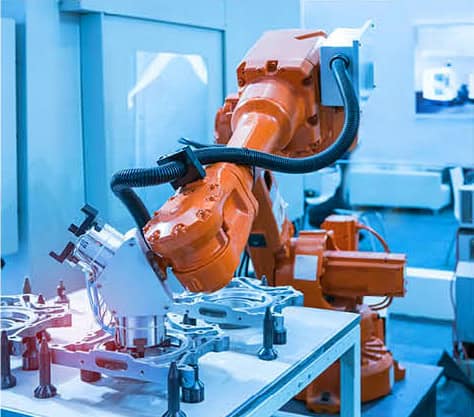
Engendering Technology Trust in Physical and Agentic AI
May 13, 2026Manufacturers adopting physical and agentic AI must build trust in reliability, security, and safety. Success depends on safe operating boundaries and preserving human accountability in AI-driven processes.
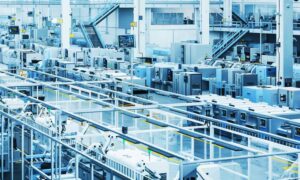
Orchestrating Material Handling with AI & Automation
May 1, 2026AI, automation, virtualization and secure IT/OT orchestration can turn material handling constraints into scalable competitive advantage. A unified digital foundation helps manufacturers reduce risk, unlock data and optimize operations across the enterprise.
Manufacturing Leadership Council Announces Finalists for the 2026 Manufacturing Leadership Awards
April 10, 2026Manufacturing Leadership Council named finalists for the 2026 Manufacturing Leadership Awards and Partners in Collaborative Innovation, recognizing digital transformation leaders across the manufacturing sector.

From Smart Factory to Smart Enterprise
March 27, 2026Manufacturers are digitizing production, but data gaps, workforce readiness and disconnected processes are limiting smart factory ROI. The next step is linking factory systems, product knowledge and enterprise workflows into a smart enterprise.

Practical AI Steps to Build Smarter Factories in 2026
March 20, 2026AI is helping factories improve speed, resilience, and profitability by embedding digitization and automation into daily workflows. Successful 2026 pilots start with business outcomes, use ready data, and scale through human-in-the-loop governance.

Smart Factories, AI, Supply Chains and Data: MLC’s 2025 Surveys
November 23, 2025MLC’s 2025 surveys show manufacturers advancing digital maturity, AI, and data use, but facing hurdles from legacy systems, data gaps, workforce resistance, and supply chain disruption.

Exploring Digital and Physical Convergence at Eclipse Automation
October 21, 2025MLC members toured Eclipse Automation’s iPort to see digital twins, AR/VR demos, and shop-floor innovation in action. The event highlighted how digital transformation and automation are accelerating factory design and production.

How Data Strategy and Governance Can Drive Success for Manufacturers
September 30, 2025Manufacturers need a clear data strategy and governance framework to improve supply chain visibility, ensure compliance, and build the data foundation required for effective AI and automation.

5 Key Questions on the Path to Industrial DataOps
September 30, 2025Industrial DataOps helps manufacturers turn siloed data into real-time insights, improving agility, continuous improvement, and smart manufacturing. A data product strategy and unified standards can scale value across factories, supply chains, and future AI needs.

The Industrial Data Foundation Imperative: Building Manufacturing’s AI Future
September 30, 2025Manufacturers need strong industrial data governance and contextualization before scaling AI. Companies with mature data foundations are more likely to achieve real ROI and enterprise-wide AI success.
Dialogue: Agentic AI Moves from Insights to Action
September 30, 2025Agentic AI is moving manufacturing from insight generation to task execution, helping cut engineering cycle times, boost productivity, and address labor shortages. Success depends on strong governance, trust and training as humans and AI work side by side.

The AI Divide: Manufacturing’s Pivotal Moment is Here
July 24, 2025AI is now production-ready and delivering measurable manufacturing gains in quality, maintenance, and productivity. Manufacturers that fail to adopt it quickly risk falling behind AI-enabled competitors.

Defining the Human-Machine Relationship
July 10, 2025AI is reshaping the human-machine relationship, pushing manufacturers to define what intelligent machines should do and appoint leaders to set boundaries.

Maximizing Continuous Improvement with GenAI
July 9, 2025GenAI can help manufacturers overcome CI sustainability and connectivity challenges by automating workflows, capturing knowledge, and measuring savings. It also improves human decision-making, though data security, legacy integration, and ROI remain key hurdles.
Connectivity and AI Drive the Future of Manufacturing
July 1, 2025AI, fiber optics, 5G and edge computing are transforming manufacturing into agile smart factories with faster decisions, better quality control and stronger security.
