
The Value Leak: Why Digital Wins Fade After Go-Live
The technology works, but value quietly leaks through eroded trust, change fatigue and the human systems no one manages after go-live.
KEY TAKEAWAYS:
- Value leaks not because technology fails but because the organization runs out of the human capacity to carry it.
- Sustainment is a leadership discipline: treat the workforce’s capacity for change as a finite constraint and measure adoption months out rather than at the moment a system technically works.
- Earning an operator’s trust in AI is far harder than teaching them to use a screen and cannot be solved with training alone.
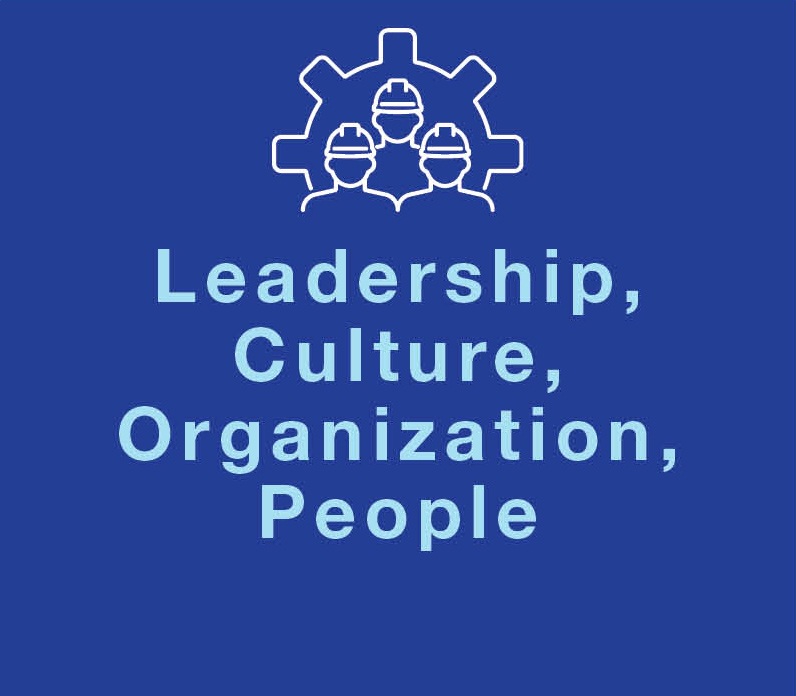
I have stood in a lot of go-live celebrations. The line is running, the dashboards are lit, someone takes a photo with the plant leadership, and the deployment team is already thinking about the next site. It is a good moment, and it is usually where the story is treated as finished.
But the real story starts a few months later, when no one is watching. Someone quietly goes back to the old spreadsheet. An operator stops glancing at the recommendation on the screen. The value that was so carefully written into the business case never quite shows up. Nothing broke. The technology works exactly as designed. And yet the return is leaking out, slowly, through the seams where the system meets the people who were supposed to run it.
After years of deploying manufacturing systems across dozens of plants and hundreds of asset go-lives, I have come to believe the hardest problem in digital manufacturing is not deployment. It is sustainment. We have become very good at standing systems up and remarkably poor at keeping their value alive. And the difference between the two is almost never technical. It is organizational, cultural and deeply human, and it is where leaders should spend far more of their attention than they currently do.
“A modern manufacturing workforce is not living through one transformation. It is living through a decade of them, stacked on top of each other.”
Consider what the leak actually costs. The capability the business paid for depends on people continuing to do something different than they did before, every shift, indefinitely, often long after the deployment team has gone. That is a much taller order than getting the software configured correctly. A dashboard no one trusts is worse than no dashboard at all, because it costs attention and gives nothing back. And when operators quietly work around a new workflow, that is rarely a failure on their part. More often it is a signal: the system solved a problem the plant did not have, or it added friction the business case never saw coming.
The Hidden Cost of Change Fatigue
There is a deeper cost underneath all of this, one we talk about far too little: change fatigue. A modern manufacturing workforce is not living through one transformation. It is living through a decade of them, stacked on top of each other. New system, new process, new dashboard, new initiative, each with its own launch, its own promise, its own demand that people give up a familiar way of working for an unfamiliar one.
Every rollout draws from the same finite reservoir of energy and goodwill. When that reservoir runs dry, we call the symptoms resistance, disengagement or turnover. The real cause is simpler and more uncomfortable: we kept spending a resource we never bothered to measure or replenish. Value does not leak because the technology fails. It leaks because the organization runs out of the human capacity to carry it.
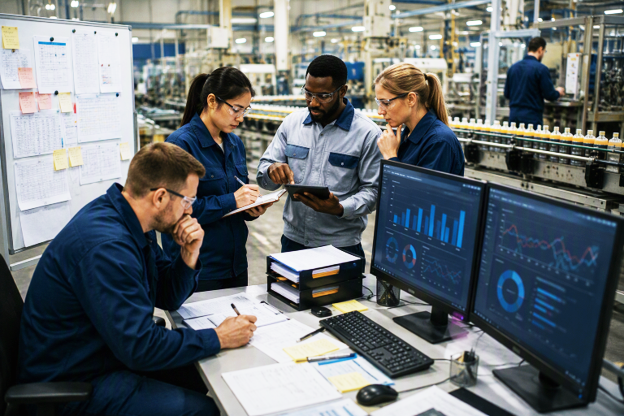
If the problem is human, so is the solution. The leaders who sustain value treat the capacity to absorb change as a real constraint, as real as capital or line time, and they manage it on purpose. They sequence initiatives instead of launching everything at once. They retire old tools with the same discipline they use to introduce new ones, so the floor is not carrying the weight of five overlapping systems. And they are honest with people about why a change is happening and what it will and will not do for them, because credibility spent overselling one initiative is credibility you will not have for the next.
The Leadership Habits that Make a Difference
None of this is an argument for slowing down. It is an argument for building the kind of organization that can move fast without leaving value stranded behind it. In practice, that comes down to a few concrete habits:
- Ownership for outcomes sits with the plant, not the deployment team, and it is settled before go-live rather than handed over afterward.
- Success gets measured months out, at the point where value either holds or leaks, not at the moment the system technically works.
- Leaders treat operator trust and organizational energy as things to be invested and protected; not resources they can assume are endless.
These are not soft concerns adjacent to the real work. They are the mechanism by which the real work pays off.
This discipline matters more now than it ever has, because the next wave of manufacturing technology raises the stakes on exactly the thing we are worst at. As we move from deploying systems to deploying artificial intelligence on the factory floor, we are no longer asking people simply to use a screen. We are asking them to trust a recommendation. And that is a far harder thing to sustain.
You Don’t Need More Training—You Need More Trust
When an AI-driven suggestion appears next to a machine and the operator ignores it, our reflex is to schedule more training. But in my experience the operator understands the tool perfectly well. What they are withholding is trust, and trust does not transfer through a training module. It is earned when the model is right often enough to matter, when it is transparent enough to question, and when the person on the floor believes the organization will stand behind them if they act on a recommendation that turns out to be wrong.
Trust is an organizational commitment, not a curriculum. The manufacturers who struggled to sustain the value of a dashboard will struggle far more to sustain the value of an algorithm, unless they build the human capacity for it first.
So the manufacturers who win the next decade will not be the ones who deploy the most technology the fastest. They will be the ones who close the gap between what they install and what they sustain and who carry that same discipline into the age of AI.
That gap does not close with better software. It closes with leaders who take the human side of transformation as seriously as the technical side, who measure adoption as rigorously as uptime, and who understand the one thing the go-live celebration tends to hide: the value was never really in the system. It was always in whether people would use it, trust it and keep using it long after the team that installed it had gone home. M
Author bio:

Suraj Sriram is Digital Manufacturing Leader at Kimberly-Clark Corporation.