
A Practical Approach to Physical AI in Manufacturing
Measurable value from physical AI begins with existing assets, laying the foundation for autonomous operations in the future.
KEY TAKEAWAYS:
- Manufacturers can best approach physical AI as a continuum of maturity rather than a single leap to full autonomy.
- Enterprises can begin capturing value now by connecting their existing cameras, sensors, and data, and prioritizing business problems with measurable ROI.
- As physical AI matures, governance will span both people and machines, blurring the traditional HR/IT divide and requiring attention to talent, process, and cost risks alongside technical ones.
At trade shows and conferences worldwide, humanoid robotics are taking the stage, heralding for some a new era in industrial automation. The growing availability of robotics and other physical AI-enabled machines might suggest manufacturers are poised to leap from how work is performed today to fully autonomous, self-optimizing systems.
The vision is ambitious and enticing, but leaping into the future may not be the most viable path forward.
Today, we are seeing a convergence of mature technologies becoming practical at scale: simulations, agentic systems, digital twins, and cheaper compute. This convergence is opening the door to physical AI use cases across most industries. Deloitte’s 2026 State of AI in the Enterprise found 58% of surveyed companies report at least limited use of physical AI, and the report forecasts 80% of companies will use physical AI in some capacity in the next two years.
There is general consensus that connected operating systems that can learn and improve are the future of manufacturing. However, autonomy is an outcome, not a starting point, and most organizations have a way to go in conditioning their enterprise, data, and technology systems for an autonomous future.
The path to self-optimizing systems begins with tractable actions that make better use of existing assets and investments, deriving immediate value and building the foundation for higher levels of physical AI maturity. Speed is a factor, however. Manufacturers are facing similar challenges with comparable access to AI platforms, solutions, and physical AI assets. The race to transform is already underway.
A Continuum-Based View of Physical AI
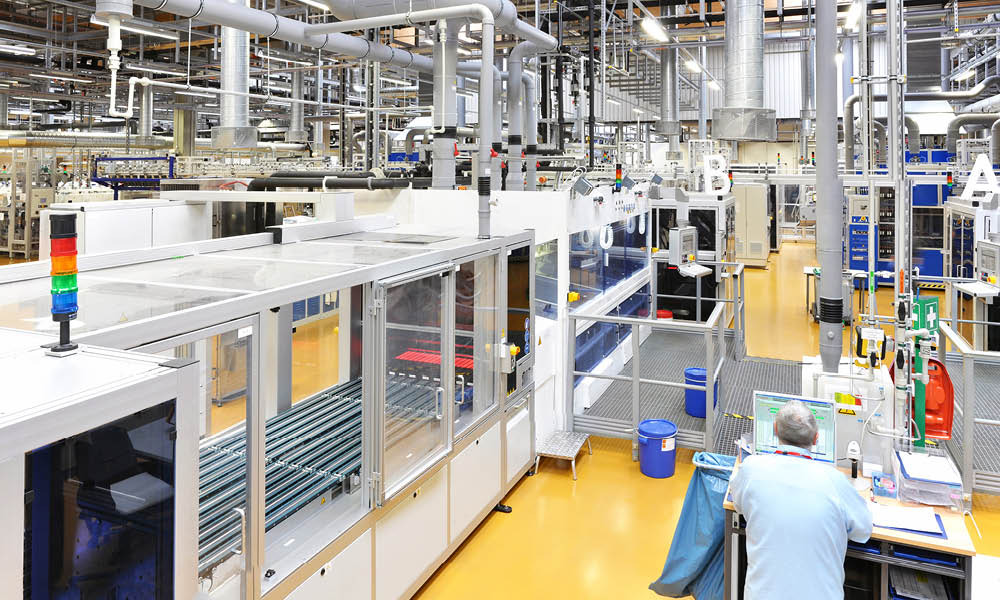
Physical AI is where the digital and physical worlds meet. It refers to systems that enable machines to autonomously perceive, understand, reason about, and interact with the physical world in real time. This can include types of robotics, but it also includes simulations, sensors, self-driving vehicles, and many of the assets manufacturers already possess.
Physical AI isn’t all or nothing. It should be viewed along a continuum of capabilities: sensing the environment; understanding it; recommending and taking actions; and ultimately, autonomous self-optimizing systems.
“The traditional divide between HR and IT becomes less logical as an enterprise progresses along the physical AI continuum.”
Manufacturers may be closer to physical AI use cases than they assume. They likely already use cameras, sensors, and fixed platforms, and connecting these technologies can constitute a foundation for moving along the continuum. There are tractable basic use cases that can be accessed today to create business impact while also setting the stage for a grander vision with physical AI. By closing existing data loops, connecting data, and using physical AI with control systems, manufacturers can find value at the outset and establish a model for how technologies can be brought together to enable true autonomy.
There is a range of analytics problems that are currently addressed manually—and need not be. For example, closing data loops enables a system to take measurements, surface trends, and cross-reference materials to determine where drift is starting to happen and recommend an offset in real time. Or, as another example, connecting sensors, repair schedules, and simulations can improve machine defect detection by recommending human inspections before issues arise.
Moving along the continuum is not only a matter of connecting technologies. Progress also relies on how processes are reimagined to use physical AI, how the workforce is shaped and supported, and how costs and risks are managed through governance.
Managing People, Machines, and Risk
In years past, a new enabling technology (e.g., cloud computing) sat in the domain of IT, with some nexus to human relations as it related to talent needs and workforce adoption. This made sense when technologies were intended to support the human worker and simply improve productivity. AI, however, is not just a tool for human productivity. It works alongside humans in processes designed for a human-machine workforce.
The traditional divide between HR and IT becomes less logical as an enterprise progresses along the physical AI continuum. HR and IT functions may even begin to blur. Governance and risk management impact people and technologies, and the strategies and processes for managing the human workforce are not so different from managing agents and self-optimizing systems. Taking this enterprise-wide view, organizations can be better positioned to think through how to manage the risks associated with physical AI.
“Before investing in exciting new technologies (such as robotics), focus on where physical AI generates measurable value today.”
Risks include common technology challenges (e.g., output accuracy, data security), as well as potential safety risks resulting from robotic systems. But some of the less obvious risks have as much to do with people as they do with the tools people use. In particular:
- Talent risks: The enterprise contends with attracting and retaining the talent needed to thrive in an era of self-optimizing systems. What new skills will be required to work with physical AI? Will upskilling and training suffice for the human workforce, or will new hires be necessary? If new talent is needed, how will the enterprise attract it, especially given geography challenges related to where facilities are located?
- Capability and process risks: At this point, agents cannot reliably identify root causes or manage engineering changes. That remains a human domain, and decision quality is paramount. If the processes for identifying engineering problems and managing solutions are only modestly sufficient for human decision-making, they will be even less suitable beneath layers of physical AI.
- Strategic risks: The first use cases along the continuum can likely be found in existing assets; but as AI maturity and deployment increase, the enterprise will face higher operating expenditures for compute, which must be managed. There will also be transformational changes in how people work, and the workforce will need to be informed and engaged as stakeholders when decisions and actions are increasingly delegated to machines.
The Next Steps on the Continuum
There is an odd phenomenon playing out across businesses and industries. In some organizations, there is a top-down mandate for the workforce to use AI for its own sake, rather than to address a business need with measurable return on investment (ROI). Perhaps it owes to a concern over being left behind by competitors, which is not unfounded. But focusing on AI capabilities over business needs and opportunities can lead to expensive applications that do not solve expensive problems.
Put another way, don’t approach AI as a science experiment that might create value. Instead, start with the mindset of addressing business needs and explore how AI can drive measurable outcomes, such as launch performance, faster changeovers, fewer quality escapes, reduced labor shortages, or lower maintenance costs.
From here, there are three straightforward steps to move the enterprise along the continuum to self-optimizing systems:
- Embrace a bias toward action. The organization’s AI journey started as soon as the workforce had access to generative AI platforms, and the pace of transformation is picking up. Don’t wait for perfect data or ideal circumstances. Instead, take iterative, methodical steps that align with enterprise strategy and resources. If you don’t start today, there’s a risk you may never catch up.
- Address expensive problems first. Before investing in exciting new technologies (such as robotics), focus on where physical AI generates measurable value today. Identify suboptimal processes and leverage and connect existing assets as a part of transforming the process. This can unlock near-term ROI while also preparing processes for greater levels of machine autonomy.
- Close the loops. To get going, invest in closed-loop manufacturing systems rather than isolated pilots. The greatest future returns will likely come from a connected operating system that can learn and improve, and closing loops today moves in that direction. In addition, there is a need to strike a balance between upfront simulations and changes in the plant environment. Connect digital twins with operations, and close the loop between manufacturing, engineering, maintenance, and quality.
The vision for self-optimizing systems is bold, but the era of physical AI is still nascent. Now is the time to explore the physical AI capabilities that already exist in manufacturing assets and begin transforming processes and the workforce to capitalize on true machine autonomy. M
Author bio:

Michael Popeney is Senior Manager, Strategy, Growth, and Transformation | SCNO with Deloitte Consulting LLP.

