The “Megatrends” Are Coming: Global Predictions Manufacturers Should Know
Get the Latest News
Get involved
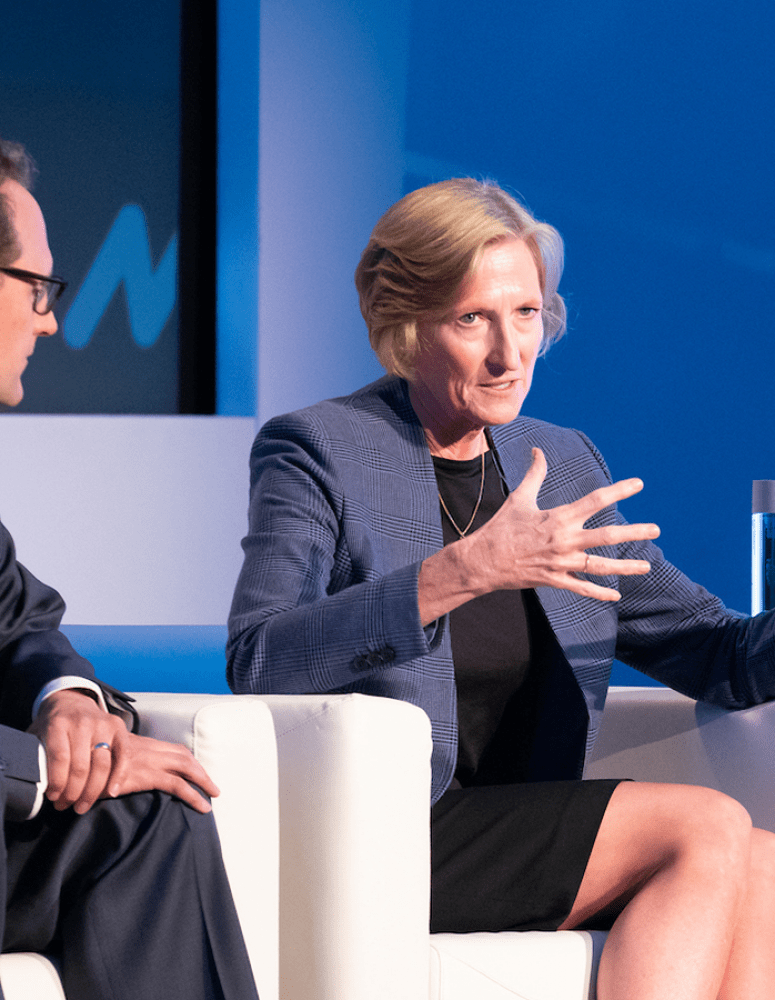
Several “megatrends” affecting manufacturers and the world at large will begin unfolding in coming years. University of Cambridge Judge Business School Dean Dr. Mauro F. Guillen made this prediction during a presentation at the recent Manufacturing Leadership Council’s “Manufacturing in 2030: The Shape of Things to Come” event.
Three trends: “Three kinds of trends … are coming together to produce a very different situation by the year 2030,” said Guillen, the author of “2030: How Today’s Biggest Trends Will Collide and Reshape the Future of Everything.” He categorized them as “population trends, trends about emerging markets and technological trends.”
Here, we break down some of the highlights from these three umbrella trends.
Durable-goods demands will start earlier—and extend later: Owing largely to immigration patterns, large durable-goods purchases will, on average, start to come earlier in life, Guillen said.
- Thus, in coming years, durable-goods manufacturers can probably expect their customer demographic to broaden to include younger people.
- At the same time, Guillen said, given that people are living longer and better, consumers will wield purchasing power for longer than they did in decades past. “There is a massive concentration of wealth in the upper age groups,” Guillen said. This will mean greater demand for certain goods, such as robotics capable of caretaking, later into people’s lives.
Purchasing-power centers will shift: Currently, the U.S. and Europe are the world’s largest consumer economies, but by 2030, those distinctions will belong to China and India, Guillen said. And by 2040, India will have eclipsed China in this regard, due to population growth.
- While older people will hold onto their purchasing power, younger consumers will hold sway for larger buys as they spend their money on homes, cars and other major purchases.
- Meanwhile, wealth accumulation will continue to grow everywhere in the world, he said, fueling the appetite for manufacturers’ goods.
Emerging markets will overtake developed ones: Manufacturers can soon expect to see emerging markets become larger than developed ones, Guillen said.
- That trend will mean a shift in manufacturer focus away from the U.S. and Europe and toward Africa and India. Said Guillen, “Sooner or later consumer markets will gravitate toward where the population is.”
The last word: Guillen’s main point of advice for manufacturers? To “identify the wave that you want to surf and take that opportunity, go with that wave. It’s so much better than going against the prevailing winds. You’ll be aligning yourself with the global economy.”
Related

Blockchain in the Semiconductor Industry: 5 Innovative Use Cases
Blockchain technology is set to empower the semiconductor industry to expand its business horizons.

According to Reportlinker research, the semiconductor silicon wafer market stood at $9.85 billion in 2019 and will reach $13.64 billion by 2025, with a CAGR of 6.18% between 2020 to 2025. Such growth rates accentuate the need for semiconductor companies to integrate business processes with the blockchain to enhance security, transparency, and encryption. While blockchain technology is still in the early stages of development, it is now poised to aid semiconductor manufacturers in decreasing costs & counterfeits and enhance visibility into the value chain.
Embracing Blockchain
With semiconductors evolving as the building block in multiple hi-tech products – from smartphones, to electric vehicles, to household appliances – industry innovation and advancements directly impact a broad range of market segments. As the demand grows multifold, so will the complexities across manufacturing & supply networks.
Enter blockchain, which has the potential to help ease many semiconductor manufacturing pain points. Blockchain’s distributed functionality, bundled security measures, and inherent features such as smart contracts, assist manufacturers in tracing goods, regulatory compliance, managing records transparently, and automating supply chain processes & payments. It also enhances collaboration among suppliers, manufacturers, and customers. In addition, it helps protect IP and reduces counterfeiting, while integrating blockchain with IoT and AI/ML technologies, helps to improve their predictive maintenance capabilities, reduce batch-based updates, and increase transparency & harmony in the value chain.
Blockchain Use Cases
#1 Blockchain for Supply Chain Visibility
Both COVID and recent semiconductor shortages have underscored the need for deep insights into both the immediate supply chain and the supplier’s supply chain down to the source. Blockchain does just that, bringing all the stakeholders under one unified platform and enhancing transparency. The threat of disruption can be eliminated when there is clear visibility through multiple levels, from manufacturers to distributors and repair shops. As a result, the global blockchain supply chain market is slated to grow from US$253 million in 2020 to US$3,272 million by 2026, at a CAGR of 53.2% during the forecast period, according to the Markets & Markets report.
Implementing blockchain solutions help semiconductor companies to record price, date, location, quality, certification, and other relevant information to manage their supply chains effectively. The availability of this information within blockchain increases traceability of the material supply chain, lowers losses from the counterfeit and gray market, improves visibility & compliance over outsourced contract manufacturing, and potentially enhances a semiconductor company’s brand equity in the market.
Moreover, combining blockchain technology with Radio Frequency Identification (RFID) tag equipment enhances the visibility of wafer electronics along the supply chain. It helps verify the sources of raw material origins from the supplier, track & trace materials with unique data ID, and detect any counterfeits.
Data is written onto an RFID tag, which can be encrypted and published through blockchain technology. Merging the blockchain technology with RFID tag equipment lets the manufacturers, suppliers, distributors, transporters, and customers create a single source of trusted information mechanism in the supply chain.
#2 Blockchain for Enterprise Collaboration
Businesses have started leveraging blockchain’s intrinsic traits into their operations, such as security, integrity, and transparency. The versatile nature of blockchain permits companies to collaborate safely with business partners in a shielded environment. Blockchain solutions synchronize data between business partners, creating a shared and immutable record of data and transactions.
Acting effectively as a ‘middleware’ enables confidential and complex collaboration between enterprises without leaving any sensitive data on-chain. Blockchains build relationships and drive collaboration while letting enterprises stay in control of their sensitive information. The blockchain network safeguards the privacy of all of the parties involved and strengthens the security and credibility of the transaction.
Offering stakeholders access to the same information in real-time, blockchain develops a trusted environment among the partners by sharing verified information on a shared ledger. This creates newer opportunities for semiconductor enterprises as well as their suppliers and assists them in navigating new value for many years to come.
#3 Blockchain for Business Process Transformation
Blockchain technology contains a record of all transactions happening in a peer-to-peer network. With each occurrence of a new transaction, data transferred through blockchain gets encrypted, making the entire ledger highly secure. Always looking for new opportunities, many businesses have already started using blockchain as part of their business process transformation strategy. One of the biggest use cases in this journey has been blockchain-based tracking of raw materials & finished products, providing detailed tracking information to all stakeholders within the supply chain.
Another blockchain feature that businesses are fast exploring is the smart contract. Smart contracts get automatically executed when predetermined conditions and terms are met satisfactorily. According to Gartner, the business value of blockchain will exceed $3.1 trillion by 2030, and this augurs well for the early adopter semiconductor industry to integrate enterprise-wide secure blockchain networks into their existing technology platforms and scale their businesses rapidly.
#4 Blockchain for Data Monetization
There is no central data repository controlled by only one organization due to the distributed record system in the blockchain network. As no single central data store is open to external attacks, security is far stronger. Once data gets embedded onto the chain, it cannot be changed. Blockchain integrates best-of-breed cryptographic mechanisms which guarantee the network participants’ digital identity and secures the stored data’s privacy to enable role-based data access. Additionally, smart contracts – embedded business logic – can be added to a blockchain, which enables the automation of many processes and secures the handling of contracts. The application of smart contracts automatically structures that data into a digestible format, eliminating manual re-organization. Offering all the stakeholders in the value chain greater visibility into the data, the distributed ledger enhances transparency, data distribution timeliness, information sharing, and data access.
#5 Blockchain for Counterfeit Equipment and Material Identification
Companies have been combating counterfeiters for years, investing significant time and resources to guard against the risk of defective and fake parts entering the production system and to prevent clever look-alikes and reverse-engineered goods from stealing sales.
According to a BCG study, counterfeit parts cost component manufacturers about $100 billion annually in the electronics industry. The Semiconductor Industry Association estimates that semiconductor manufacturers lose $7.5 billion in revenue to counterfeiting each year. A further study by OECD stated that counterfeit & pirated goods accounted for $461 billion in worldwide trade. That’s about 2.5% of global GDP, which doesn’t include untold additional costs from the threats counterfeits may pose to the recipients’ health, safety, and security.
The use of smart tags and blockchain allows supply chain partners to verify a product’s authenticity quickly. Even if a smart tag can be copied, the information on the blockchain will remain unchanged. A scan of the item will exhibit the exact location of manufacturing and sale, exposing the duplicate item as a fake. Advances in blockchain-with-IoT counterfeit detection provide visibility in tracing and recording of provenance data from source to sale.
New Horizons
Blockchain provides an immutable, permanent digital record of materials, parts, and products, augmenting end-to-end visibility to all the stakeholders in the semiconductor value chain. Reducing costs & time by eliminating the need for third parties that manage ledgers and transparent transactions ultimately improves the profitability of semiconductor companies.
The ability to support smart contracts, such as on the Hyperledger Fabric and Ethereum platforms, is opening possibilities for speeding commerce and reducing costs. As edge computing and blockchains advance in capability and become integrated or interoperable, semiconductor companies would achieve peak efficiency and flexibility. In short, blockchain is set to empower the semiconductor industry to expand its business horizons.
Harnessing Next-Generation Warehouse Robotics
Advances in robotics and AI are driving innovation in warehouse automation.

A radical shift in consumer behavior accelerated by the COVID-19 pandemic has exponentially expanded the wide-scale adoption of e-commerce and online purchasing. As consumers increasingly make online purchases for standard items like groceries and household supplies, this shift is likely to become permanent ― creating a significant impact on warehouse operations and creating new opportunities for innovation.
Early winners so far in this business environment have been the technology-embracing early adopters such as Amazon and Ocado, who have innovated with robotics and software to create more efficient, durable supply chains. However, there’s room in this space for all players who are prepared to adopt warehouse automation and robotics. It’s likely that those who don’t participate in this disruptive innovation risk being left behind.
Adapting to Warehouse Challenges
Traditionally, robotics has been applied in repeatable, fixtured applications such as those on automotive assembly lines. Now, artificial intelligence (AI) and the Internet of Things (IoT) are enabling breakthroughs in robotic perception and complex decision-making in real time. This allows robotic technologies to operate effectively in more complicated, unstructured environments such as the warehouse and distribution networks.
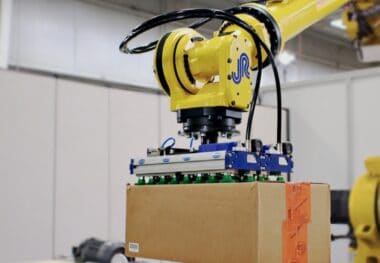 Due to the inherent modularity and scalability of robotics systems for picking, sorting, and palletizing, organizations of all sizes can reap the benefits of these innovations while making warehouse operations more efficient, cost-effective and safe. The ability to add solutions with a high return ROI, intermixed with manual processes, make them ideal candidates for investment in existing manual facilities.
The Robotics Opportunity
The rise of e-commerce has stressed existing parcel and distribution networks to their limits. Faced with a huge need for the efficiencies and increased capacity that warehouse automation can fill, a new breed of intelligent robotics solutions has started to go mainstream. The scalability of these solutions makes them a good fit for an industry that is still mostly manual, and they are a logical next step. For many enterprises, warehouse automation adoption is lagging significantly or absent altogether. According to DHL research, 80% of warehouses remain manually operated. Another recent survey indicates that the greatest investments to date are in conveyance (63%), while robotic palletizing and picking are still very low (15% and 8%, respectively).
Major e-commerce companies know that nimble, automated supply chains are key to meeting demand and staying ahead of the competition. To keep up with these major players, smaller and emerging e-commerce companies must take the right steps to automate their warehouse supply chains too.
Every Season is Peak Season
Prior to the pandemic, e-commerce and logistics were geared toward the peak season (early November through January). Distribution networks would ramp up for peak, then struggle with underutilized capacity for the remaining nine months. In 2020, the peak began in mid-March and hasn’t slowed. The challenge now for many smaller enterprises is how to innovate and grow within a peak environment that never subsides. Enterprises no longer have the luxury of a downtime during which to upgrade facilities to increase capacity and integrate new technology.

The e-commerce giants have an easier time integrating new technology organically because their technology stacks are already built. Smaller enterprises must work to bridge this chasm. One of the advantages of advanced robotics is that it can be integrated into operations without taking down a system or facility. Robotics can be added little by little, in a modular fashion, without major disruptions.
The Holistic Approach
There is now a significant need among both types of businesses to explore the best ways to develop, productize, and scale solutions across their entire distribution networks. By adopting a customized holistic solution that addresses key challenges and provides insights across their IT and warehousing infrastructures, companies now have an opportunity to drive continuous improvements and create flexible, robust supply chains that can keep up with increasing customer demands.
M2030: The Shape of Things to Come
What will the shape of manufacturing look like in ten years’ time?
“We are here to put our shoulders to the wheel of progress,” MLC Co-founder David R. Brousell told the hundreds of live and virtual attendees in his opening remarks at the MLC’s new Manufacturing in 2030 event, which opened in New Orleans earlier today.

“We can’t be certain about what tomorrow will bring, let alone what might be in 2030,” he continued. However, “we can project or extrapolate based on current trends and conditions, with a reasonable amount of probability, what the shape of manufacturing will look like in 10 years’ time.”
Well before the pandemic, noted Brousell, manufacturing companies were altering their organizational structures, in part due to the influence of technologies that were increasingly empowering more people with information, shifting from hierarchical, command-and-control models to flatter, more collaborative ways of organizing people and processes. As a result, manufacturing is now harnessing its intellectual capital much more effectively than ever before.
“All around us, conventional notions of what can be accomplished in production as we understand the potential of new technologies, how we arrange work and processes based on new organizational forms, and how we leverage the creativity of our people, are being reimagined,” he said.
There will continue to be challenges ahead, of course, from continued global disruptions, to redefining the relationship between humans and machines, to the increasing urgency of combatting climate change and how to create more sustainable, digitally enabled, circular business models. “Competitive advantage will flow to the companies that master these challenges,” he added.
But there will also be massive opportunities too. In the decade ahead and beyond, Brousell believes that factories and plants will be distinguished by a now evolving set of technological, organizational, and leadership characteristics that will set them apart from facilities of the past. “The extent and depth of change ahead of us will be profound”, he predicted.
 That’s why events such as Manufacturing in 2030, and the MLC’s upcoming year long M2030 Project during 2022, is so vitally important to help manufacturers explore, understand, and plan for, the shape of things to come for the manufacturing industry over the next decade.
“If we do things right in the next 10 years,” stressed Brousell, “we have the opportunity to create the greatest engine of manufacturing production humankind has ever seen.”
9 Key Considerations for Digital Twins in Manufacturing
Get the Latest News
Sign up here
Many manufacturers are ahead of the curve when it comes to digital 4.0, but not all may know about the numerous potential benefits of digital twins. A virtual replica of a physical product, asset or system, a digital twin makes the physical computable. It offers manufacturers a range of advantages, including better business visibility, increased product reliability and new revenue streams.
Is digital twinning right for your business? Below are some key considerations to weigh as you think about adopting this advanced manufacturing technology.
- Digital twins are not complete representations of a product.
Digital twins are akin to algorithms. They are highly reliant on data input, and since it’s nearly impossible to turn every aspect of a physical product into data, digital twins are not precisely twins, though they are pretty close. A digital twin is created by outfitting a product with sensors that can track functionality. These can then be used to study simulations of the product’s performance. So digital twins are made up of models and data, but their complexity is reliant on the data used to create them. - Digital twins evolve over time.
As a product moves through its lifecycle, the information in its digital twin will shift in response to its performance, technical configurations and environmental parameters. - Information and data are key across a product’s lifecycle.
For a digital twin to remain relevant and useful over time, make sure you are utilizing a data structure that can be easily used and exchanged over different systems and applications. - You can use digital threads to enable digital twins.
Digital threads are a communication framework that link all elements of a product’s data, from design to obsolescence. Using them reduces the complexity of digital-twin implementation and increases digital twins’ accuracy. - Transparency is critical.
Identify, classify and correlate data across various sources so there’s transparency and automated information-identification processing. These are crucial for smooth digital-twin deployment. - Open format is best.
In contrast to a proprietary system, which ties an organization’s data to specific systems, limiting its use, an open format ensures that your digital twins can be easily updated, scaled and extended when new models and data representing new outcomes become available. - Your device management plan matters.
In addition to ensuring that data is in a format that can be accessed and used over time, you should make similar considerations for devices that will access that data (i.e., phones, tablets and laptops). Make sure that your device plan can keep up with your needs for monitoring, updating and security. - The cloud is your friend.
Cloud-based computing, storage, analytics and artificial intelligence/machine learning services enable operational technology and information technology managers to build, deploy and grow solutions quickly and affordably. - There are costs and benefits.
Digital twins today may be expensive to build and maintain, but they enable technical agility and speed that foster easier scaling—and save money in the long run to boot.
Learn more about digital twins: As decision-makers in manufacturing embrace digital transformation, it is imperative to consider digital twins as key pieces of the process. For more insights on digital twins in manufacturing, read Digital Twins: The Key to Unlocking Value and Innovation.
Related

Manufacturing’s Sustainability Challenge: The Race is On
Manufacturing Leadership Journal content and MLC resources are exclusively available to MLC members. Please sign up for an account or log in to view this content.
Harnessing M4.0 to Embrace the Circular Economy
Manufacturing Leadership Journal content and MLC resources are exclusively available to MLC members. Please sign up for an account or log in to view this content.
Thinking Beyond Normal
Manufacturing Leadership Journal content and MLC resources are exclusively available to MLC members. Please sign up for an account or log in to view this content.
The Sustainability Calculus
Manufacturing Leadership Journal content and MLC resources are exclusively available to MLC members. Please sign up for an account or log in to view this content.
A Digital Path to Improved Sustainability
Manufacturing Leadership Journal content and MLC resources are exclusively available to MLC members. Please sign up for an account or log in to view this content.