Technology changes how work gets done, but leaders must also prepare and allow for a more empowered workforce.
TAKEAWAYS: ● Manufacturing 4.0 technologies such as connected devices, extended reality, and AI are ushering in a new era of manufacturing. These technologies represent a “deepening digitization” that is compatible with existing systems while empowering frontline workers. ● Connected devices enable information sharing between machines and directly to workers. At the same time, AI and XR help make large volumes of data accessible and actionable for workers on the factory floor. ● However, the biggest roadblock is often an organizational culture that is resistant to change. Starting small with enthusiastic teams and measurable pilot programs is recommended for smoothly integrating these technologies.
Many companies have mastered today’s industrial processes and may have even become overly complacent. However, emerging technologies including connected devices, extended reality, and artificial intelligence are once again creating a new era in the history of work – M4.0.
Despite making work safer and more efficient, these technologies face significant barriers to adoption. While these barriers include knowledge of technology and the cost to invest in hardware and software, the biggest barrier to adoption is reluctance to change. Effective change management is essential to the implementation of sustainable technological advances.
M4.0 as Deepening Digitalization
The last recent change in the manufacturing industry was the digitalization of many aspects of production. These changes brought benefits such as more accurate process optimization and more effective knowledge capture and transfer. It also made many processes more specialized.
The data that was captured couldn’t always be accessed, understood, or used by the frontline worker. For many workers, this meant more instructions from the top — a relationship that many managers are only too happy to maintain.
“M4.0 is both compatible with existing management and optimization systems and more empowering to the average worker.”
At first glance, M4.0 looks like more of the same since it is driven by even more complex and nuanced and less familiar emerging technologies. The nature of M4.0 is, in many ways, a “deepening digitalization” of work. That means that it is both compatible with existing management and optimization systems and more empowering to the average worker.
Connecting the Worker
Existing digitalization trends have created more information, but too often that information has been siloed both from other sources of information and from the worker who created it first and needs it most.
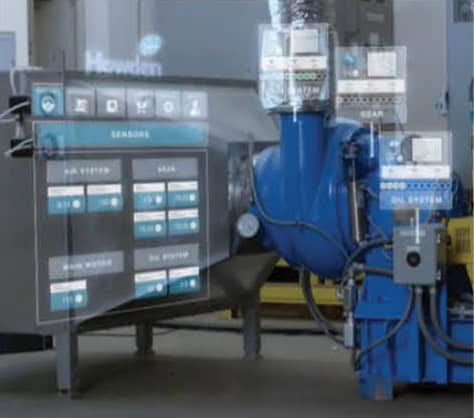
A key component of M4.0 is connected devices that share information with each other. On a factory floor where many machines perform different tasks to make a single product, connected devices enable more efficient process optimization because all the information from all the devices is presented in a single context. Moreover, when devices are directly connected, some of these elements can be automated in networks of machines that work more like colleagues than tools.
But M4.0 isn’t just about connecting devices – it’s about connecting the worker. Connected devices mean more information from more places with more possibilities than ever. Without some of the other key technologies of M4.0, it would only perpetuate many of the problems inherent in the existing digitalization of work.
People often talk about AI replacing frontline workers, but this is a misconception. While robots are increasingly becoming a part of factory floors, they are most often used by human workers (rather than instead of human workers) to perform difficult and dangerous tasks. However, some analysts may find AI taking over as it interprets and presents information from connected devices directly to workers on the factory floor.
Dirk Schart is Senior Director Go-to-Market at PTC.
To bridge labor gaps, manufacturers must upskill their workforce to transition from task execution to AI supervision and operational governance. Manufacturers are under growing pressure to do more with a constrained workforce. In June 2026, there were 481,000 manufacturing jobs open nationwide, according to the
Please sign in with your member email to view this resource.
Your privacy matters
We use cookies to operate this site, remember your preferences and understand how visitors use it. By selecting ?Accept cookies,? you agree to our use of cookies as described in our Privacy Policy.