
The Shift to 4.0 Supply Chains
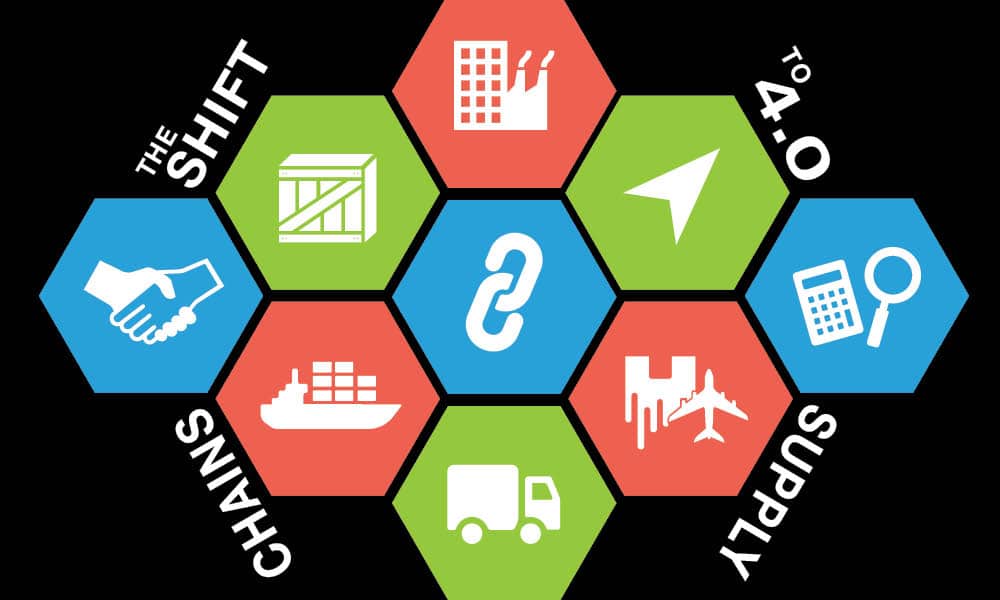
Is Just-In-Time now DOA? Many manufacturers are now questioning whether JIT approaches are still valid in an era of continuing supply chain disruption.

The supply chain disruptions of the last two years have led many manufacturing companies to question whether the pendulum has swung too far toward Just-in-Time (JIT) production processes, leading some to explore regional strategies enabled by expanding digital capabilities to improve agility and resiliency.
As part of these efforts, companies are now urgently reviewing their manufacturing and distribution footprints, analogous to the skeleton of their supply chain system. Similarly, they are also examining their sourcing strategies and rethinking where to source critical components and raw materials to improve supply continuity without sacrificing too much efficiency. Companies are also working to improve their supply chain processes, or the muscle of their supply chain system. Finally, companies are looking to better enable their supply chain strategies by investing in data, analytics, and information technologies to help improve decision making, comparable to the nervous system of a company’s supply chain system, constantly sending signals based on the latest information.
And just as in the human body, the connectivity between the skeleton, muscles, and nervous system of the supply chain is crucial to a company’s overall health and wellbeing. Developing more regional supply chain networks with more robust digital capabilities is now becoming critical for many manufacturers that want to stay nimble and responsive to today’s disruptive environment.
New Challenges, New Strategies
For more than 20 years, many companies followed the Toyota Way, identifying and eliminating waste wherever they could and moving as close to just-in-time production as possible. The past two years, however, have painfully highlighted the fact that this focus on efficiency has come at the expense of resiliency.
Since 2020, manufactures have gone from trying to minimize inventories to trying to increase buffers and find alternative suppliers for key components, all in an effort to meet agreed-upon service levels. Prior to globalization and the proliferation of the just-in-time approach, many manufacturers already had more regionally focused supply chain strategies that incorporated buffers across the supply chain, enabling companies to continue producing even if one region had been disrupted. There is now a shift back to that kind of approach.
Manufacturers now need to strengthen the process of executing on these supply chain shifts and explore how their strategies can enable them to do so. Here are some options for companies to consider as they reevaluate their approaches:
Digital Solutions
Leveraging digital technologies to drive visibility into supply chains is critical for nimble operations. Imagine being able to detect a risk event long before it becomes an issue. New and innovative technologies such as predicative analytics, big data, and digital twins have opened up new possibilities on this front.
Most companies only have clear visibility into their tier-one suppliers—that’s one of the many factors that led to original equipment manufacturers (OEMs) being caught off guard by the current semiconductor chip supply crisis, and one of the endless recent examples of why it’s crucial for manufacturers to understand the critical components in their value chain even if those components exist at a lower tier. Before the pandemic, some automotive manufacturers had zero visibility into the demand and supply dynamics of semiconductors they purchased as part of a larger sub-assembly.
While there have been major advances in analytics to help monitor supply chain risk across tiers, the analytics still hinge on having a good understanding of all the nodes in your supply chain and how they interact with one another. Once a supply chain has been mapped, analytics, new risk management and planning solutions can help to predict and mitigate risk through better scenario planning and optimization. More companies have begun to monitor and evaluate their suppliers with real-time data to assess their quality, on-time delivery, financial health, production capacity, and impacts from relevant geopolitical issues.
Along with analytics, businesses are increasing the use of Internet of Things technologies to build digital twins of their manufacturing processes. These digital simulations can improve visibility, allowing for better management of shop floor operations and better engineering and manufacturing processes.