Digital Manufacturing in Action at GM’s Cadillac Plant in Tennessee
Robotics, AI, and people work together to shape the future.
Henry M. Leland, who founded Cadillac in 1902, believed in creating superior products. Cadillac’s early slogan, “The Standard of the World”, reflected his philosophy of establishing a mark of excellence in the automotive industry.
Over the years, Cadillac delivered on that philosophy with innovations that included the pioneering development of interchangeable parts, the first fully enclosed automobile cabin and first electric starter, the first mass produced V8 engine, fuel injection, and many other accomplishments.
The famous Cadillac Crest symbolized Leland’s philosophy. Featuring mythical birds called merlettes, which are derived from the family crest of Antoine de la Mothe Cadillac, the founder of Detroit whom Leland named his automobile after, the crest symbolized a constant striving for excellence. The crest has undergone more than 30 redesigns and even though the merlettes are no longer used in the logo—they do appear as an “Easter Egg” on the LYRIQ’s dashboard—the message of excellence remains.
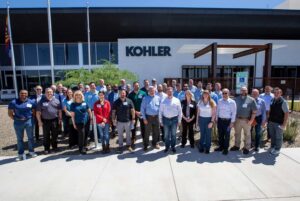
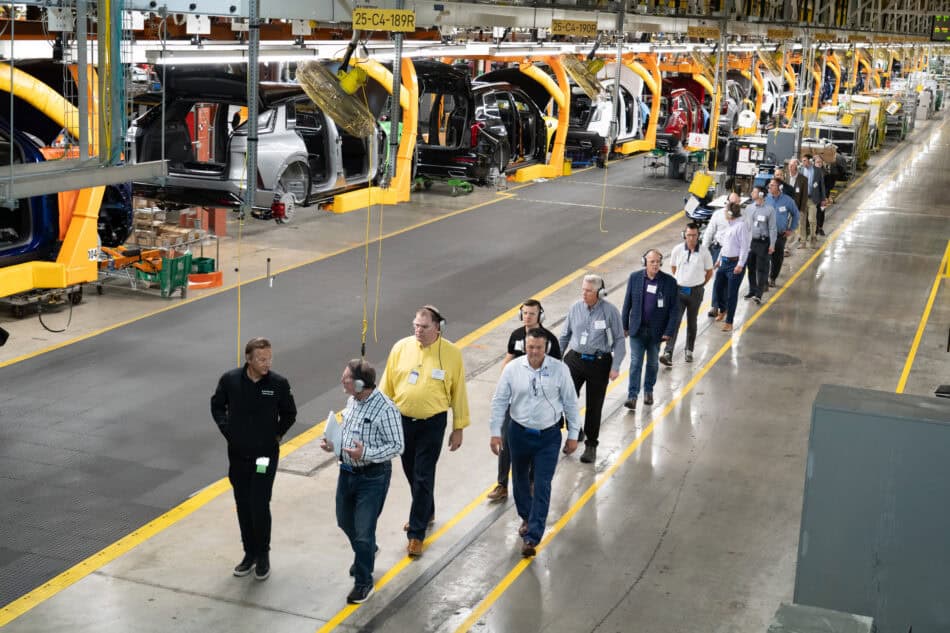
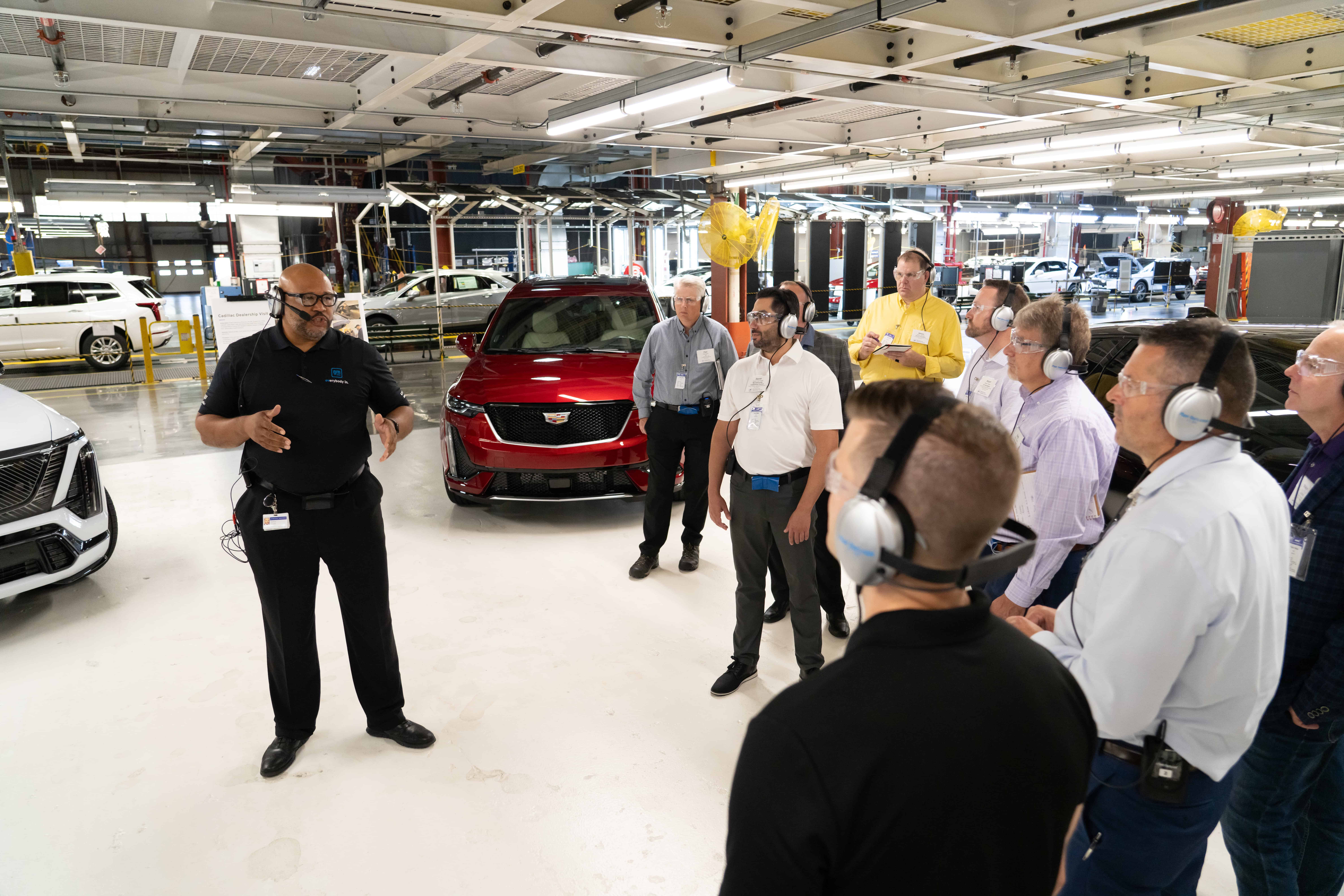
Today, Cadillac, which General Motors acquired in 1909, remains the premier brand of its $187 billion parent, and is leading GM’s charge in the electric vehicle market. In early September, nearly 100 members of the Manufacturing Leadership Council toured GM’s 11 million-square-foot, 4,000-employee Spring Hill, TN, Cadillac factory to see how Cadillac’s electric LYRIQ and VISTIQ and internal combustion engine-based XT5 and XT6 vehicles are manufactured. The factory will begin building the Chevy Blazer in 2027.
On the Factory Floor
What MLC members saw was a highly automated and digitalized factory that uses robotics and artificial intelligence to improve safety, quality, and efficiency on the manufacturing floor.
As one example, GM has a joint venture with LG Energy Solutions to make Ultium cell batteries in Spring Hill.
The batteries are inspected in error proofing stations using cameras and laser stations that check connections. AI is used to detect problems. Together with GM’s Avantguard system, which tracks work sequences and steps, these stations have resulted in a significant drop in warranty issues for customers.
 In the assembly operation, MLC members witnessed a GM first—a robot installing a seat in a car on a moving conveyor without human involvement. The operation relies on a vision system and Light Detection and Ranging (LiDAR), a remote sensing method that uses pulses of laser light to measure distances and create 3D models, to align the seat and place it in the precise location while also maneuvering through the door holes.
MLC members also saw how GM mixes vehicle types on the same production line. All five vehicle types produced in the factory, including both EV and internal combustion engine vehicles, are assembled on the same line. Automated mobile robots deliver the proper chassis to each vehicle body as the unfinished cars move down the line. With five different models moving down the line at the same time, the company has paired automation and AI with a surprisingly simple way for workers to identify each vehicle model. A color-coded temporary overlay on the vehicle’s fender signals which vehicle they’ll be working on next.
Beyond the Factory Floor
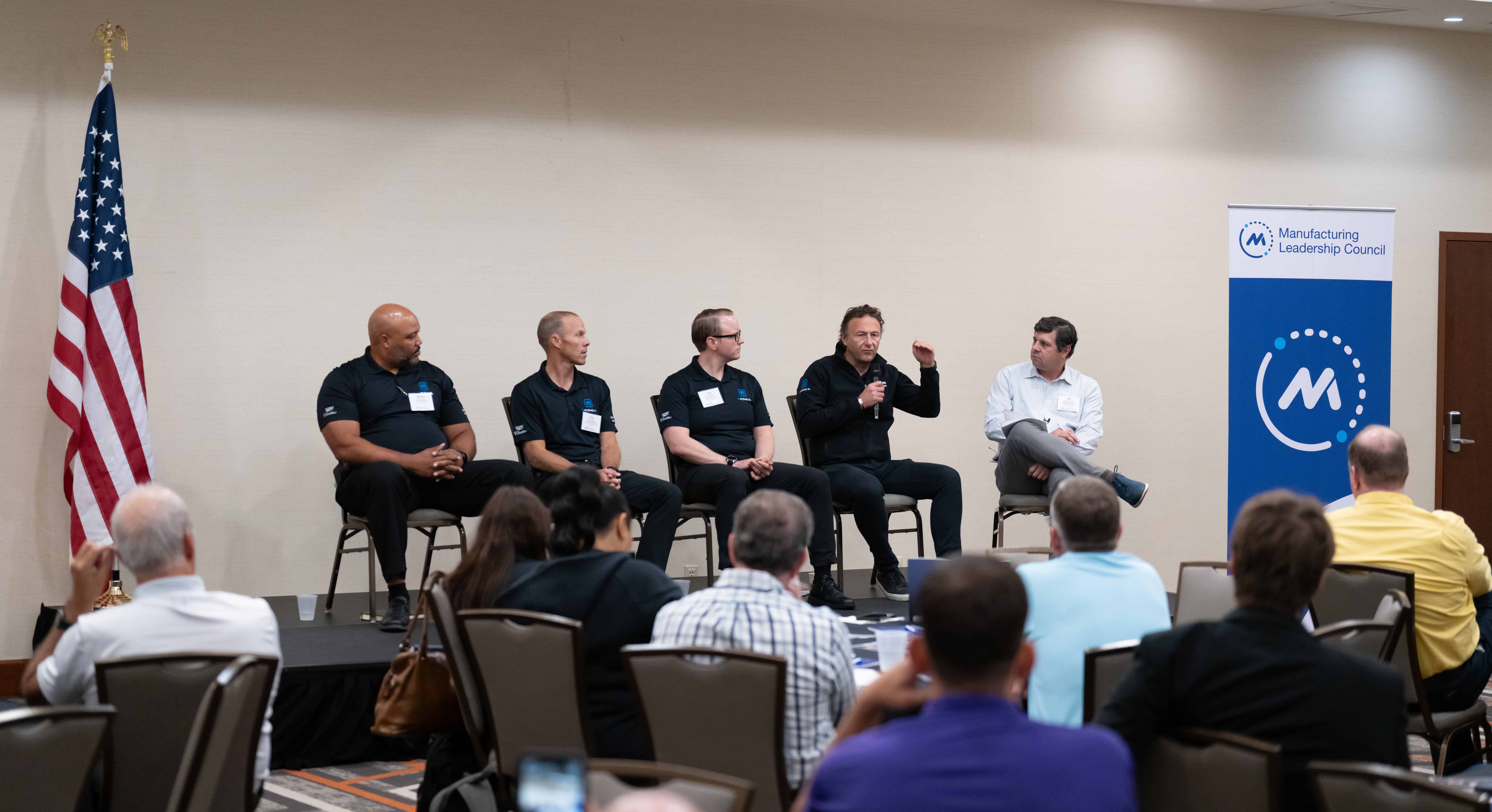 Breakout session topics included supply chain management and manufacturing optimization. In the supply chain session, tour participants learned that the company’s focus is on simplifying and streamlining supply chain operations so that it can achieve more flexible operations. To improve efficiency, their guiding principle is to fit one more part in every box and move that box one less foot.
In the optimization session, GM shared that the company’s automation rationale is based on three factors: safety, continuous quality improvement, and efficiency.
According to GM, the best manufacturers know how to get the most out of their technology, equipment, and people—noting that each brings something valuable to the table. The key now is to select the projects that deliver the most ROI while staying true to Cadillac founder Henry Leland’s quest to be the standard of the world.
Photos by David Bohrer/National Assoc. of Manufacturers