
Creating an M2030-Ready Organization by Embracing Generational Divides
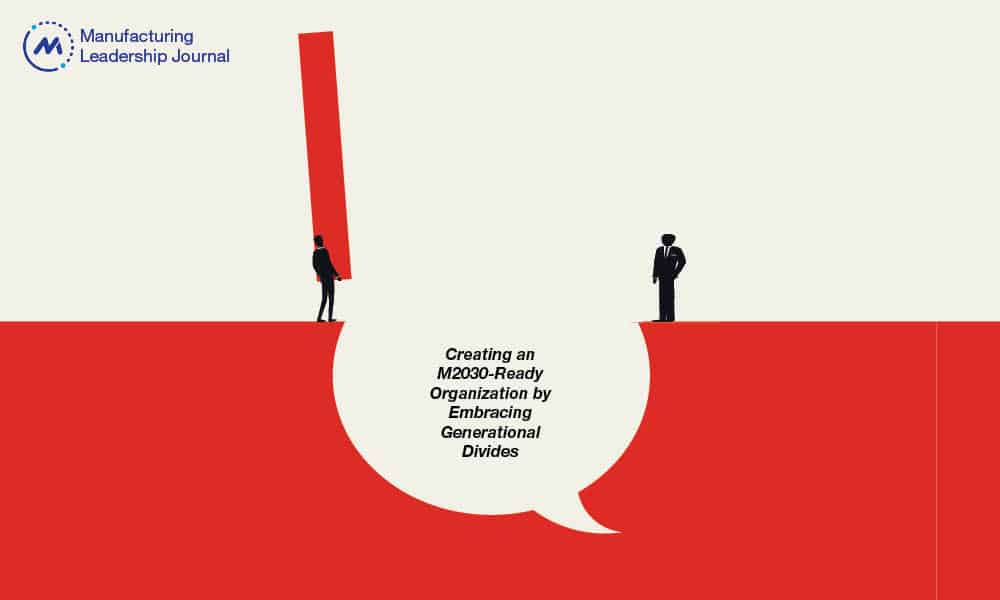
Leveraging the strengths and understand the needs of each generation in the workforce can promote organizational resilience.

TAKEAWAYS:
● Learn how to evolve your leadership, organization, culture, and people to lead your organization to be future-fit.
● Learn how to turn the generational gap into an opportunity by leveraging the unique perspectives, skills, experiences, and preferences of each generation and fostering a culture of knowledge sharing.
● Build coaching tribes that utilize mentoring and reverse mentoring to speed up the training of your younger generations, who will soon make up the largest portion of your workforce, while leveraging the unique experience of the other generations in your workforce.
To successfully implement Manufacturing 4.0, industrial organizations must prioritize leadership, organization, culture, and people. This will enable them to build a strong foundation for adopting new technologies and processes to drive long-term growth and success.
Adopting a collaborative, cross-functional approach involving all stakeholders — employees, suppliers, and customers — requires breaking down traditional organizational silos and fostering a culture of openness, transparency, and continuous learning.
One key strategy for implementing collaborative, cross-functional structures is to establish multidisciplinary teams that bring together individuals with diverse skill sets and backgrounds. These teams should identify opportunities for improvement and develop solutions that leverage advanced technologies.
A clear vision for transformation, easy-to-understand communication of the benefits and goals of the initiative, along with training and development programs are critical change management strategies for the successful implementation of Manufacturing 4.0. Employees need the skills and knowledge to work effectively as the environment around them changes.
To ensure that the change is sustained over the long term, it’s important to use metrics to measure the success of the initiative and to continuously monitor and refine processes. Regular feedback and input from employees, customers, and other stakeholders can contribute to resiliency as market conditions change and technology advances.
Creating a culture of innovation and continuous improvement can be achieved through incentivizing employees to share ideas and contribute to process improvements. Regular feedback and recognition can also encourage employees to embrace new ways of working and adopt a continuous improvement mindset.