




M2030 Perspective: More Robots, Better Jobs. But How?

Advanced robotics could create better manufacturing jobs, increase productivity, and help solve workforce shortages by 2030. But there’s no guarantee.

TAKEAWAYS:
● How can U.S. factories increase robot adoption from 10% to 50% by 2030?
● Automation will inevitably change workforce roles and create different challenges.
● Three key guidelines for positive-sum automation.
At a family-owned factory in northeast Ohio, business is good. The floor is bustling. Rows of lathes and mills are spitting out a variety of precision aerospace components. Their specialty, like many medium-sized manufacturers in the region, is to produce high-mix, low-volume machined parts. But there’s a problem.
The factory could be growing much faster. It has the demand to add more machines. It could even add another shift. But it can’t find the people. In surveys and interviews with manufacturers, this has become a common refrain: we’re ready to grow, but we can’t recruit and retain talent fast enough.
The workforce challenge started long before COVID. Between 2010 and 2019, job openings in manufacturing more than tripled. And projections suggest the tight labor market for production work is here to stay. Given the aging manufacturing workforce, the Manufacturing Institute and Deloitte anticipate that the manufacturing labor shortage will only worsen.
Looking ahead to 2030, with policymakers and multinationals eager to invest in the future of American manufacturing, how can manufacturers of all sizes overcome the workforce bottleneck and grow?
Is Automation the Answer?
Some factories are betting on automation as the answer. The idea is simple: if you can’t find people to do the job, train machines to take over routine tasks. The vision might be that by 2030, manufacturers can substantially increase their output without growing their workforce – all by adding new technologies.
In our research with MIT’s Work of the Future Initiative studying how dozens of factories deploy new technologies and adjust their workforce, we’ve seen that this vision just doesn’t compute. To achieve what we call “positive-sum automation” – technology adoption that improves productivity as well as flexibility – firms need to ask more of their workers. Adopting new technologies doesn’t solve a manufacturer’s workforce challenges. It just changes them.
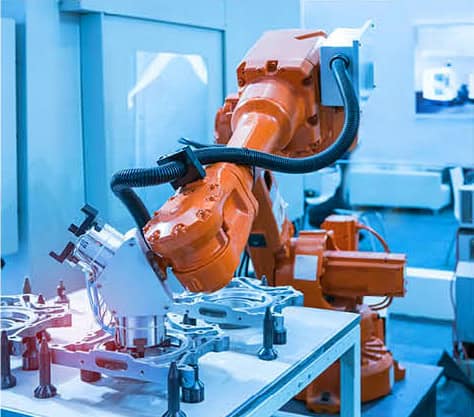
Imagine a factory can’t find a machinist, so they buy a robot. In principle, the robot could load and unload parts from a machine, freeing a machinist up to operate more machines at once. The robot certainly promises productivity gains, but they aren’t guaranteed. In the short term, the robot will require more labor and more skills to be deployed on the factory floor.
Before the robot can operate efficiently, the production team will need to re-engineer the process of tending the machine, and program the robot to perform the task as efficiently, or more efficiently, than an operator. It’s a process of trial and error that could take months of tweaking and pulling the firm’s leaders away from their day jobs. Even if the factory calls on external help from an integrator to program the robot and fine-tune the process, they will need to build up the internal skills to fix the robot when it goes down – or reprogram it if the process changes.
Dr. Julie Shah is the H.N. Slater Professor of Aeronautics and Astronautics and leads the Interactive Robotics Group of the Computer Science and Artificial Intelligence, at MIT. She is also co-lead of MIT’s Work of the Future Initiative and a member of the MLC’s Board of Governors.