
News and Insights
Orchestrating Material Handling with AI & Automation
May 1, 2026AI, automation, virtualization and secure IT/OT orchestration can turn material handling constraints into scalable competitive advantage. A unified digital foundation helps manufacturers reduce risk, unlock data and optimize operations across the enterprise.
Survey: Smart Factories Enter the Execution Era
January 31, 2026Manufacturers say smart factories have moved into an execution era, with AI maturing, digital transformation becoming a competitive advantage, and more than 90% planning to maintain or increase investments in 2026.

Digital Manufacturing in Action at GM’s Cadillac Plant in Tennessee
October 9, 2025GM’s Cadillac plant in Tennessee uses robotics, AI and automation to improve safety, quality and efficiency, including battery inspections and a robot installing seats on a moving line.
Connectivity and AI Drive the Future of Manufacturing
July 1, 2025AI, fiber optics, 5G and edge computing are transforming manufacturing into agile smart factories with faster decisions, better quality control and stronger security.

Smart Factories and Supply Chains Thrive with Connectivity
April 1, 2025Smart factories use IoT, AI, 5G and advanced analytics to improve visibility, agility and efficiency. Manufacturers are also addressing legacy equipment, labor shortages and supply chain disruptions with connected, data-driven solutions.

Digital Transformation Sees Explosive Growth
March 18, 2025Manufacturers are rapidly boosting digital and smart factory investments, with most expecting continued growth and greater AI adoption. Survey respondents say digital transformation is redefining the industry.

A Pioneer in Automation Becomes a Champion for Digital Transformation
May 6, 2024Rockwell Automation is using MES, IoT, digital twins and real-time analytics to drive digital transformation at its Twinburg plant, boost efficiency and reduce silos. The company is now exploring AI and generative AI to deepen data-driven operations.

Dialogue: Manufacturing is Still a People Business
April 1, 2024Rockwell CEO Blake Moret says automation is accelerating, but manufacturing will remain people-driven, with workers empowered by data and AI. He sees autonomous operations growing, not replacing human decision-making.

How Close Is the Smart Factory of the Future?
March 7, 2024Manufacturers are steadily investing in smart factories, but only 7% have extensively digitized operations; most say AI and autonomy will grow, though resistance to change remains the biggest barrier.

What’s Ahead for Manufacturing in 2024?
February 7, 2024Experts say manufacturers should prepare for a mixed 2024 outlook, with tight labor, regulatory pressure and recession risks offset by strong construction, AI adoption and resilience-focused digital strategies.

Empowering Frontline Workers with 3D Models and IoT Data
February 1, 20243D models, IoT, and AR are helping manufacturers equip frontline workers with real-time guidance, improving productivity, quality, and efficiency. A connected worker strategy can boost agility, compliance, and employee empowerment.
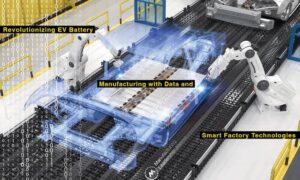
Revolutionizing EV Battery Manufacturing with Data and Smart Factory Technologies
February 1, 2024EV battery manufacturers are using Manufacturing 4.0, data, AI and blockchain to improve efficiency, quality and supply chain resilience. These smart factory tools also help them scale, innovate and respond faster to market and regulatory changes.
How Immersive Technologies Make Manufacturing More Efficient
October 1, 2023Immersive technologies like AR, VR, and MR improve maintenance, training, safety, and compliance in smart factories. They help reduce downtime and costs while boosting productivity and equipment reliability.
Survey: Smarter Factories Are on the Way
February 1, 2023Manufacturers are continuing M4.0 investments despite economic uncertainty, with more company-wide digital deployments and strong expectations for major gains in factory digitization by 2025.

OT Asset Management: Securing Maximum Agility
January 16, 2023Continuous OT asset visibility and inventory management strengthen cybersecurity by revealing vulnerabilities, rogue devices, and communication paths, while improving uptime, efficiency, and compliance.
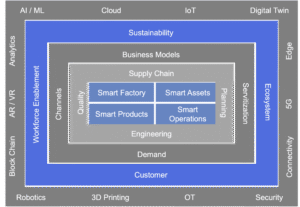
Smart Factories: Finding Greater Value in the Ecosystem
January 13, 2023Smart factories can drive agility, revenue growth, and resilience when embedded in a broader digital transformation strategy. Success depends on data mastery, analytics, and scaling beyond pilot projects.

Accelerating M4.0 with Legacy System Condition Monitoring
January 10, 2023Legacy factories can accelerate Manufacturing 4.0 by adding condition monitoring, analytics, and ML to existing equipment, improving performance and reliability without costly modernization. Success depends on secure connectivity, data strategy, and expert guidance.

Top Manufacturing Tech Trends of 2022
January 4, 2023Manufacturers embraced AI, digital twins, collaborative robots, cybersecurity training and low-code tools in 2022, driving smarter operations, faster innovation and safer, more flexible production.
